

Getting to Know Business Process Management
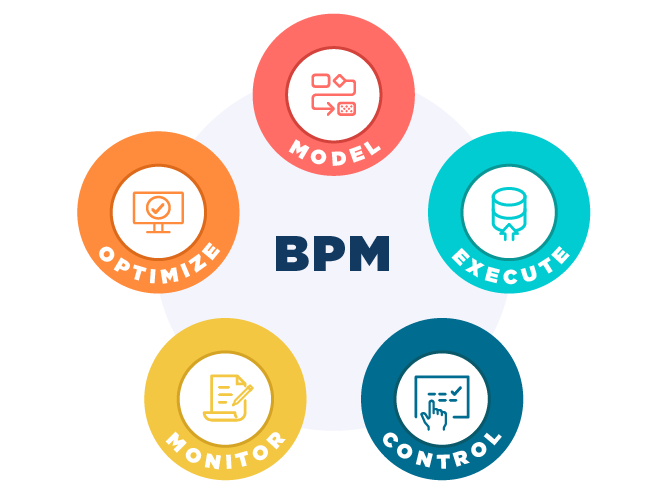
Business Process Management (BPM) is a methodical way to help an organization improve its processes. BPM is all about finding, designing, implementing, carrying out, monitoring, and constantly improving business processes. BPM aims to improve productivity and efficiency in the business by streamlining workflows and making sure that all operational activities are closely aligned with the company’s overall goals.
The main goal of BPM is to improve the effectiveness and efficiency of processes. This usually means cutting down on mistakes, eliminating duplicate work, and speeding up the flow of work. BPM makes companies more flexible and competitive because they can quickly respond to changes in the market or customer needs. Organizations set themselves up for long-term growth by making continuous improvement a part of their way of doing business.
Within the Business Process Management framework, there are a lot of different methods and tools that are often used. Process mapping is one of these tools that helps businesses see how their workflows work, which makes it easier to find problems and places where they can improve. Another important tool is workflow automation, which lets companies automate tasks that are done over and over again. This frees up valuable employee time for more strategic work.
BPM also includes a number of models that help businesses manage their processes, such as Lean, Six Sigma, and Total Quality Management (TQM). Each of these methods has its own way of looking at things and its own set of tools, all of which aim to improve quality and cut down on waste. They help BPM reach its main goal, which is to improve processes and make sure they are in line with the organization’s strategic goals.
Increasing productivity and efficiency
Business Process Management (BPM) is very important for making organizations more efficient and productive. By creating standard processes, BPM makes sure that operations are done in the same way every time, which reduces the differences and uncertainties that often cause inefficiencies. Standardization makes sure that all employees follow the same rules, which not only makes work flow more smoothly but also makes tasks easier to understand, making the workplace more organized.
BPM also cuts down on duplicate work by a lot. When roles and activities overlap in an organization, resources and time are wasted. BPM finds these redundancies by carefully mapping out business processes. This lets companies get rid of unnecessary steps or combine tasks. This makes sure that resources are used more efficiently, which helps the overall efficiency.
BPM also has the important benefit of automation. Companies can reduce human error and give their employees more time by automating tasks that are done over and over again. Then, employees can spend more time on activities that are more important to the business, like coming up with new strategies and getting to know customers better. For example, a major telecommunications company used BPM to automate its billing process. This cut the time it took to process bills by 30%, letting employees spend more time on customer relationships.
BPM has a big effect on efficiency, as shown by real-life examples. A well-known manufacturing company started using BPM and saw a 40% drop in production lead time and a 25% drop in operational costs. These changes not only helped the company’s bottom line, but they also gave team members the freedom to work on new projects that increased overall productivity.
In the end, Business Process Management is a key tool for companies that want to improve their efficiency and productivity. BPM changes how things work by standardizing processes, cutting down on duplication, and using automation. This lets employees focus on strategic initiatives that are very important to the success of the business.
Making things easier to see and follow
Business Process Management (BPM) is very important for making organizations more visible and compliant. Getting process transparency is important because it lets managers and other interested parties keep an eye on operations. In a world where data is very important for making decisions, BPM tools help businesses find bottlenecks, inefficiencies, and areas that could be improved. This clear view of processes encourages people to be responsible for their roles and duties, which in turn leads to better performance.
BPM also makes sure that rules and regulations are followed. Many industries have very strict rules, and following them is the best way to lower the risks that come with audits and not following the rules. BPM frameworks include compliance checkpoints in the processes, which helps businesses stay in line with best practices and the law at all times. BPM makes it easier for employees to follow important rules by automating some of the most important compliance tasks.
Using analytics is another important benefit of BPM when it comes to compliance and visibility. Organizations can get useful information from BPM systems by using data analytics. This information can help them make decisions and improve their processes. Companies can find patterns, measure how well things are working, and keep improving their processes by looking at performance metrics. This data-driven approach not only helps the organization follow the rules better, but it also makes it more flexible and adaptable when rules change.
In conclusion, the integration of BPM greatly enhances visibility and compliance, resulting in improved decision-making and risk management. Companies that use BPM practices are better able to deal with complicated regulatory environments and improve their overall operational efficiency.
Improving Customer Satisfaction and Flexibility
Business Process Management (BPM) is very important for making customers happier and making organizations more flexible. At its core, BPM is about making business processes better all the time so that they work as well as possible to meet customer needs quickly. Organizations can provide faster service and greatly improve the overall customer experience by streamlining workflows and getting rid of bottlenecks. When processes are optimized, businesses can answer customer questions more quickly, making sure that each interaction is not only timely but also of high quality.
Also, in today’s fast-paced business world, being able to adapt is very important. To stay ahead of the competition, you need to be able to change course quickly when market conditions change or customer preferences change. BPM gives businesses the tools and methods they need to make changes quickly and effectively. This flexibility lets companies change their products, respond to new trends, and come up with new ideas, all while keeping customer satisfaction at the top of their list of priorities.
By using BPM practices, businesses can better collect and analyze customer feedback, which helps them find areas where they can improve. Businesses can keep up high standards of service and product quality by encouraging a culture of always getting better. This proactive approach not only builds trust with customers, but it also builds strong relationships, which are necessary for keeping customers loyal over time.
In the end, BPM’s ability to align business processes with customer expectations shows how it can change things for the better. Companies that put money into BPM are better able to meet and even exceed customer needs, which leads to long-lasting satisfaction and loyalty. Companies can deal with problems more effectively by using these methods. This will help them stay relevant and responsive in a market that is always changing.

WeeklyMinds.com is proud to feature an author who brings a wealth of knowledge and experience to our blog. Weekly Minds is an accomplished freelancer writer with 12 years of experience in the field.
WeeklyMinds.com has a passion for sharing insights and perspectives on political, news, technology, home improvement, interiors and many more. Their unique perspective on current affairs has been featured in numerous publications and they have been a guest speaker at college fests.
WeeklyMinds.com is also an avid interest in writing and reading and enjoys singing, music, shopping, travelling and some more. In their free time, they can often be found of reading the novels and various current topics.
We are thrilled to have Elia Scala as a contributor to WeeklyMinds and look forward to their continued insights and contributions to our blog.