

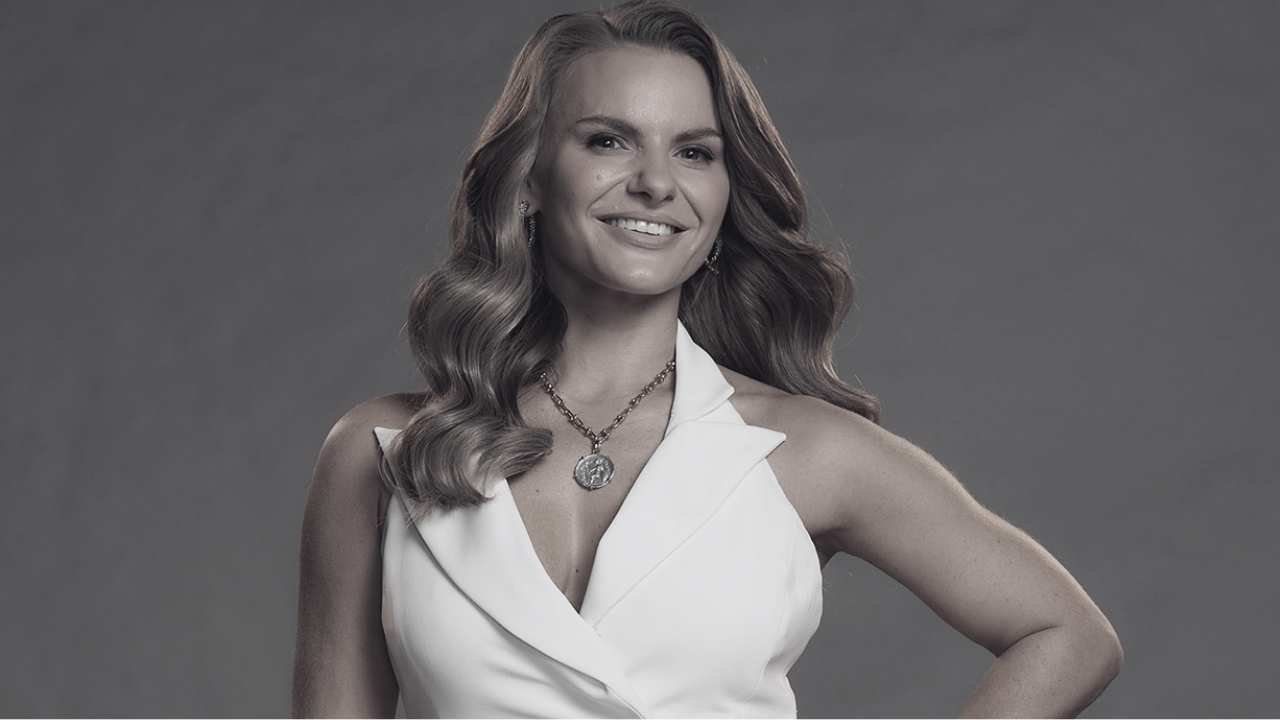

Michele Romanow: The Dragon Who Built a Fintech Unicorn and Redefined E-Commerce Funding
In the high-stakes world of tech entrepreneurship, Michele Romanow’s story is one of resilience, innovation, and pure willpower. Romanow was born in Regina, Saskatchewan, in 1985 to Ukrainian and Slovak parents. Her father, Marvin Romanow, was the President and CEO of the energy company Nexen, so she grew up in a family that knew a lot about business. But it was her own pioneering path that would make her one of the most important people in Canada’s startup scene. Romanow changed how online entrepreneurs get money by co-founding Clearco (formerly Clearbanc), a fintech giant that has put more than $5 billion into more than 10,000 e-commerce businesses in 13 countries. She stepped down as CEO in 2023 because of problems in the industry, but her role as co-executive chair and her lasting impact on Clearco show that she has always taken big risks and had a clear vision for her career.
Early Sparks: From Engineering to Starting a Business
Romanow’s journey started far away from the glitz and glam of Bay Street or Silicon Valley. She worked hard at Queen’s University in Kingston, Ontario, where she earned both a Civil Engineering degree and an MBA. This tough combination helped her develop her analytical mind and problem-solving skills. But even then, it was clear that she had an entrepreneurial spirit. She co-founded The Tea Room in 2006, when she was in college. It was Canada’s first coffee shop with no consumer waste. It was a smart move toward sustainability that turned coffee grounds into fertilizer and composted scraps. This project wasn’t just a side job; it was a statement of intent that combined business innovation with engineering precision.
Romanow graduated in 2007 and won the Agnes Benidickson Tricolour Award, the highest honor from Queen’s, for being an all-around great student, athlete, and leader. With these credentials, she jumped right into the world of startups. She had started or helped start six companies by the time she was 35, which is something that even experienced venture capitalists would notice. Her first businesses were Evandale Caviar, a sustainable aquaculture company that raised sturgeon for luxury roe, and Buytopia.ca, a daily-deals site that competed with Groupon in Canada. Then there was SnapSaves, a mobile coupon app she helped start in 2010. Groupon bought it in 2014 and changed its name to Snap by Groupon for the U.S. market. Romanow learned the hard way how to grow a business, from finding ethical suppliers for caviar to dealing with the fierce competition in the tech industry.
The Dragon’s Den: A Look and a Look
Romanow’s fame grew quickly in 2015 when she became the youngest Dragon on CBC’s Dragons’ Den, which is like Canada’s version of Shark Tank. At 30, she brought a new point of view to the panel, grilling pitches with a mix of empathy and sharpness that came from her own successes and failures. Her time on the show, which is still going on, wasn’t just about making deals; it was a master class in finding hidden talent. One important moment happened when an e-commerce founder begged for money to spend on ads. Romanow saw a gap in traditional loans because they were too rigid. He wanted funding that was based on revenue, not equity or collateral.
That moment of clarity, which happened on live TV, gave birth to Clearbanc. “I was the only Dragon who really did something about it,” she said later in a podcast interview. Romanow co-founded the company that same year with Andrew D’Souza, who was both her business and romantic partner at the time. She wanted to create a world where founders could keep their ownership while the company grew. Clearbanc offered revenue-based financing that didn’t dilute ownership. Loans were paid back as a percentage of daily sales, using data from sites like Shopify and Instagram. No board seats, no equity grabs—just money that “thinks like a founder.”
Clearco: From a Small Business to a Big Global Fintech Company
Clearbanc, which changed its name to Clearco in 2021 to show that it was expanding, quickly changed the way people borrowed money online. It approved funding in hours, not weeks, by looking at metadata like ad spend and social metrics. The model worked: Clearco became a unicorn with a $1 billion valuation in 2021, thanks to big names like SoftBank and Fidelity. It grew around the world, starting in Germany in 2022 with a €500 million promise to help local businesses.
Romanow’s leadership was very important. She became CEO in 2022, after breaking up with D’Souza. She was in charge of product, engineering, and revenue as the company grew to 500 employees and $100 million in annual revenue. She fought for inclusivity and co-founded the Canadian Entrepreneurship Initiative with Sir Richard Branson in 2017. This non-profit helps small businesses get affordable loans, including a 10% discount for women entrepreneurs through Clearco.
But the end of the fintech boom put her to the test. Clearco was hit hard by the tech slump in 2022, which was made worse by rising interest rates. In July 2022, the company laid off 25% of its workers and closed down in Ireland, the U.K., and Australia. Romanow, who is always in charge, called it “necessary discipline”: “We’re ahead of the curve.” She stepped down as CEO in January 2023 and became co-executive chair with D’Souza. Andrew Curtis, a New York finance veteran from Merrill Lynch and Lazard, took over to lead the company toward profitability. The move meant cutting another 30% of staff, which affected both junior and senior positions. Romanow said it plainly: “I’m a growth CEO; now we need one who is focused on money.”
The turn paid off. Clearco got a $100 million asset-backed debt facility from Pollen Street Capital in October 2023. This helped them expand their loans in North America. It turned Silicon Valley Bank’s debt into equity, which helped it stay stable during the banking crisis. Curtis led Clearco to focus on cash flow break-even, hiring risk and credit teams and making more loans. Romanow moved to external relations and fundraising, using her network from Dragons’ Den and board seats at Vail Resorts (NYSE: MTN), Freshii (TSX: FRII), and Queen’s School of Business.
Beyond Clearco: A Portfolio of Impact
Romanow has an impact on more than just one business. She has supported innovators in health tech, consumer goods, and other fields as a venture capitalist and angel investor. In 2018, she won the Canadian Innovation Award for Angel Investor of the Year. She’s a popular speaker and advisor, and she sits on boards like the League of Innovators and Shad, a STEM program for kids. The Canadian Entrepreneurship Initiative, which has given thousands of women the tools and money they need to start their own businesses, shows how much she cares about women in business.
Some chapters have not been perfect. Romanow was a minority investor in Toronto’s Goldie nightclub in 2021. The club lost its liquor license because it broke COVID-19 rules. She quickly spoke out against the management, stressing that she had nothing to do with it, and sold her shares. This is a reminder that even Dragons can be burned.
The Past and the Future
Michele Romanow is a role model for people who want to start their own businesses at the age of 40. She has been named one of the WXN 100 Most Powerful Women in Canada, one of Forbes’ Top 20 Disruptive “Millennials on a Mission,” and one of EY’s Entrepreneur of the Year finalists. Her awards show that her businesses have grown by 3,163% in revenue. Clearco’s growth from an idea in Dragons’ Den to the world’s largest e-commerce investor is a perfect example of her philosophy: “Pain tolerance and resilience” are the real signs of success.
Romanow is still very involved at Clearco, helping it become profitable and looking for new opportunities in 2025 and beyond. In a recent podcast, she talked about the “founders’ edge”: outsiders shake things up because they don’t care about “we’ve always done it this way.” As e-commerce picks up and AI changes how funding works, Romanow is likely to start the next big thing, maybe in sustainable tech or women-led fintech. One thing is for sure: growth follows her wherever she puts her energy. In her words, the game is about turning pain into progress, after all.

WeeklyMinds.com is proud to feature an author who brings a wealth of knowledge and experience to our blog. Weekly Minds is an accomplished freelancer writer with 12 years of experience in the field.
WeeklyMinds.com has a passion for sharing insights and perspectives on political, news, technology, home improvement, interiors and many more. Their unique perspective on current affairs has been featured in numerous publications and they have been a guest speaker at college fests.
WeeklyMinds.com is also an avid interest in writing and reading and enjoys singing, music, shopping, travelling and some more. In their free time, they can often be found of reading the novels and various current topics.
We are thrilled to have Elia Scala as a contributor to WeeklyMinds and look forward to their continued insights and contributions to our blog.