

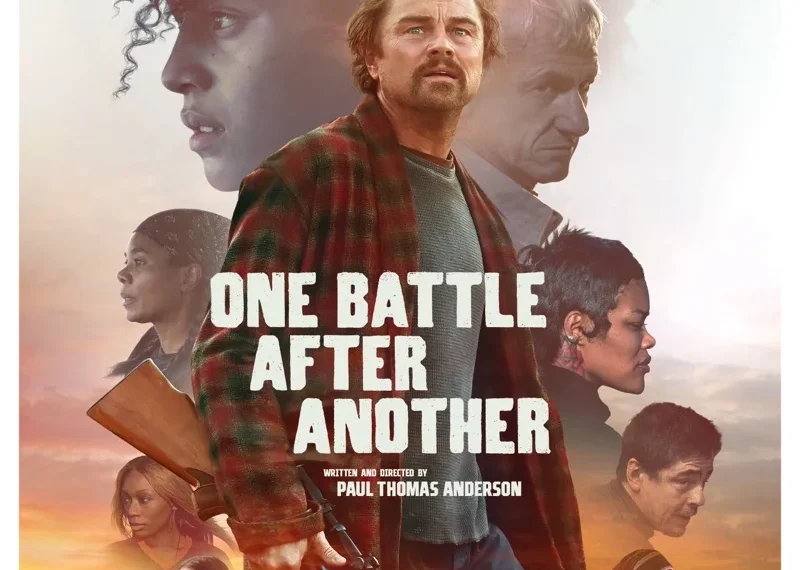
Paul Thomas Anderson’s 2025 comedy-drama/action-thriller, One Battle After Another, has been met with widespread critical acclaim, hailed as one of the year’s most vital and exhilarating cinematic experiences. Inspired loosely by Thomas Pynchon’s novel Vineland, the nearly three-hour epic is praised for its relentless pacing, technical brilliance, and a complex tonal blend that is simultaneously serious, hilarious, and deeply humanist. Critics have widely noted the film’s success in fusing genres, managing to be a hyperkinetic action thriller—featuring standout car chases and eye-popping stunts—while maintaining the intimacy and emotional core of a tender family drama set against a volatile, politically charged American landscape. The movie’s scope is ambitious, urgent, and personal, solidifying its status as a new masterwork for the acclaimed director.
The film centers on “Bob” Ferguson (Leonardo DiCaprio), a washed-up, paranoid former revolutionary and explosive expert from a group called the “French 75.” Sixteen years after a significant anti-government action, Bob is forced back into his former life when a corrupt and menacing military officer, Colonel Steven J. Lockjaw (Sean Penn), resurfaces and pursues Bob and his teenage daughter, Willa (newcomer Chase Infiniti). Reviewers have lauded the cast’s explosive performances. Leonardo DiCaprio is particularly singled out for embracing a less glamorous, more frazzled and comedic role, embodying the exhausted father and stoner revolutionary with genuine pathos. Sean Penn’s portrayal of Colonel Lockjaw is described as a wickedly mischievous, terrifying, and absurd caricature—a performance that elevates the film’s villainy. Teyana Taylor, as Bob’s estranged, fiercely dedicated revolutionary wife Perfidia, is celebrated for her raw, magnetic, and unapologetic intensity.
A key aspect of the film’s success is its bold, unflinching engagement with contemporary political themes. Set in a barely reinvented America riddled with extremism, racism, and militarized police violence, One Battle After Another is a sharp political satire that critiques structures of power without descending into mere polemic. Critics note that while the film has a decidedly anti-fascist, revolutionary spirit, it maintains its balance through dark, trippy humor and a refusal to sermonize. The film’s technical execution is also a major highlight; the VistaVision cinematography, by Michael Bauman, provides stunning, wide-format visuals, and Jonny Greenwood’s score pulses with an anxious yet invigorating energy. Despite its lengthy runtime and occasional digressions, the movie’s fighting spirit, humor, and ultimate message of hope—often described by one character as “freedom is no fear”—make it a potent and essential piece of cinema for the current moment.

WeeklyMinds.com is proud to feature an author who brings a wealth of knowledge and experience to our blog. Weekly Minds is an accomplished freelancer writer with 12 years of experience in the field.
WeeklyMinds.com has a passion for sharing insights and perspectives on political, news, technology, home improvement, interiors and many more. Their unique perspective on current affairs has been featured in numerous publications and they have been a guest speaker at college fests.
WeeklyMinds.com is also an avid interest in writing and reading and enjoys singing, music, shopping, travelling and some more. In their free time, they can often be found of reading the novels and various current topics.
We are thrilled to have Elia Scala as a contributor to WeeklyMinds and look forward to their continued insights and contributions to our blog.