

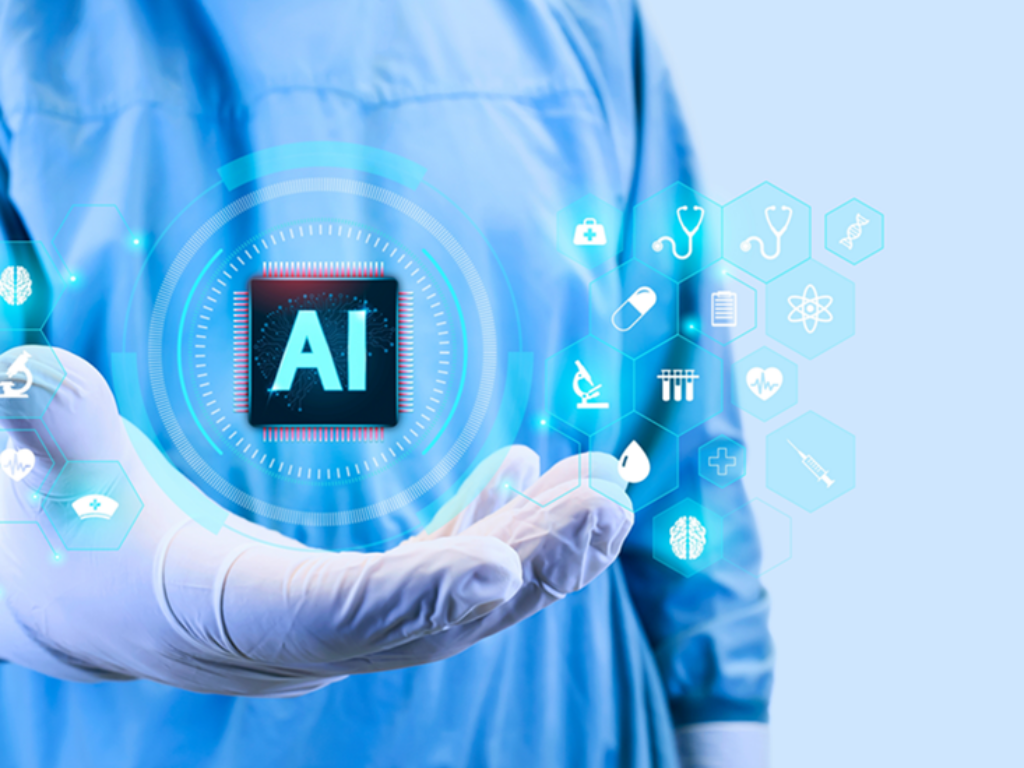
Understanding AI in Healthcare
Artificial Intelligence (AI) represents a technological revolution transforming numerous sectors, with healthcare a primary arena for its application. At its core, AI comprises algorithms and computational models that enable machines to simulate human intelligence, thereby streamlining processes and improving health care outcomes. In healthcare, several types of AI technologies are prevalent, each contributing uniquely to advancements in patient management and clinical practice.
One notable type of AI employed in healthcare is machine learning. This involves training algorithms on large datasets, allowing the software to identify patterns and make predictions. For instance, machine learning can analyze patient data to forecast disease progression, thus facilitating more personalized treatment strategies. The continuous feedback loop of data collection and model refinement enhances the system’s accuracy over time, making it an invaluable asset in predictive analytics.
Another significant technology is natural language processing (NLP), which enables machines to understand, interpret, and respond to human language. In healthcare settings, NLP is used to automate the extraction of relevant data from clinical notes and research papers, thereby assisting healthcare professionals in decision-making. By decreasing administrative burden, NLP allows medical staff to focus more on patient care rather than paperwork.
Robotic process automation (RPA) is also gaining momentum in healthcare. RPA uses software bots to automate repetitive, rule-based tasks, such as appointment scheduling and billing. This integration enhances operational efficiency and reduces the likelihood of human error, thereby directly improving patient experiences and outcomes. Consequently, the amalgamation of these AI technologies provides a comprehensive approach to revolutionizing healthcare practices, leading to more effective diagnostics, improved patient care, and streamlined administrative operations.
AI Applications Enhancing Patient Care
Artificial Intelligence (AI) is significantly transforming healthcare, particularly by enhancing patient care through various applications. One of the most impactful AI-driven innovations is diagnostic tools that enable healthcare professionals to achieve more accurate and rapid results. For example, AI algorithms are applied in radiology, where they analyze medical imaging data to more quickly identify conditions such as tumors or fractures, offering interpretations that can match or even surpass human capabilities. Such advancements not only expedite diagnosis but also help reduce errors associated with manual interpretation.
Furthermore, predictive analytics in healthcare utilizes AI to forecast patient outcomes. By analyzing vast amounts of data from electronic health records (EHRs), predictive models can identify patients who are at risk of complications or readmissions. This proactive approach allows healthcare providers to implement preventive measures and tailor treatment plans, ultimately improving overall patient care and reducing the burden on healthcare systems. For instance, a case study demonstrated that a hospital implementing AI-driven predictive analytics saw a notable decrease in post-operative complications, enhancing patient satisfaction and recovery rates.
Another noteworthy application of AI is the deployment of virtual health assistants, which provide personalized care recommendations to patients. These AI-powered systems engage with patients, offering guidance on medication adherence, symptom management, and lifestyle modifications based on individual needs. This tailored interaction promotes greater patient engagement and encourages individuals to take an active role in managing their health. A healthcare facility that integrated such virtual assistants reported improved patient education and adherence rates, showcasing the positive impact of AI on patient outcomes.
Overall, the integration of AI applications in healthcare is revolutionizing patient care by enhancing diagnostic accuracy, enabling timely intervention through predictive analytics, and increasing patient engagement via virtual assistants. As these technologies continue to evolve, they hold the promise for even greater improvements in the quality of care provided to patients.
Challenges and Considerations in Implementing AI Solutions
Implementing AI-powered solutions in healthcare is not without its challenges and ethical considerations. One of the foremost concerns is data privacy. Healthcare organizations handle vast amounts of sensitive patient information, and the incorporation of AI systems raises significant questions about how this data is collected, stored, and used. Ensuring patient confidentiality while leveraging AI tools requires robust data governance frameworks and compliance with regulations such as HIPAA in the United States.
Another critical challenge is the need for interoperability among various healthcare systems. As AI applications evolve, they must seamlessly integrate with existing electronic health records (EHR) and other health information systems. The lack of standardized protocols can lead to isolated data silos, hindering the effectiveness of AI solutions. Hence, establishing standardized formats and protocols is vital to ensure that AI can operate efficiently across diverse platforms, enhancing overall healthcare delivery.
Potential biases inherent in AI algorithms present another significant challenge. If the datasets used to train AI models are not representative of the diverse patient populations, the resulting algorithms may perpetuate existing disparities in healthcare outcomes. Addressing these biases requires continuous monitoring and validation of AI systems to identify and correct discrepancies arising from the data used for training.
Maintaining human oversight in automated decision-making processes is essential for ensuring patient safety and ethical practice. While AI can enhance the efficiency of healthcare services, patient care decisions should ideally involve human judgment to accommodate individual circumstances and ethical considerations. Strategies such as establishing oversight committees and defining the roles of AI and healthcare professionals are crucial for facilitating responsible AI use.
By acknowledging these challenges and implementing appropriate measures, healthcare organizations can harness the full potential of AI while upholding ethical standards and prioritizing patient welfare.
The Future of AI in Healthcare
The future of artificial intelligence (AI) in healthcare is poised for significant advancements that could transform the industry in multiple ways. As technology continues to evolve, we expect to see greater integration of AI solutions into telemedicine platforms. This integration is likely to enhance virtual consultations by using AI-driven algorithms to provide clinicians with real-time data analysis and decision-support tools. Such enhancements will not only improve diagnostic accuracy but also facilitate more personalized patient interactions, thereby increasing the overall efficiency of telehealth services.
Personalized medicine is another area where AI is set to make a profound impact. By leveraging machine learning and predictive analytics, healthcare providers will be able to tailor treatments based on individual patient data, including genetic information and lifestyle choices. This approach ensures that patients receive interventions tailored to their unique conditions, leading to better health outcomes and higher satisfaction rates. The role of AI in identifying patterns within vast datasets will prove invaluable for advancing personalized care, enabling clinicians to predict which therapies may be most effective for specific populations.
Furthermore, AI has the potential to revolutionize population health management. Utilizing big data analytics, healthcare organizations can track and analyze health trends across various demographics, enabling them to identify risk factors and develop targeted strategies for disease prevention and intervention. This proactive approach to health management can improve public health outcomes by addressing issues before they escalate. As healthcare systems adopt AI-powered tools for data analysis, the ability to forecast healthcare needs and allocate resources effectively will enhance the overall quality of care delivered to communities.
In conclusion, the future of AI in healthcare holds immense promise, with more sophisticated integrations in telemedicine, personalized medicine, and population health management. These advancements will not only improve operational efficiency but also enhance patient care, demonstrating that the healthcare landscape is on the cusp of a remarkable transformation.

WeeklyMinds.com is proud to feature an author who brings a wealth of knowledge and experience to our blog. Weekly Minds is an accomplished freelancer writer with 12 years of experience in the field.
WeeklyMinds.com has a passion for sharing insights and perspectives on political, news, technology, home improvement, interiors and many more. Their unique perspective on current affairs has been featured in numerous publications and they have been a guest speaker at college fests.
WeeklyMinds.com is also an avid interest in writing and reading and enjoys singing, music, shopping, travelling and some more. In their free time, they can often be found of reading the novels and various current topics.
We are thrilled to have Elia Scala as a contributor to WeeklyMinds and look forward to their continued insights and contributions to our blog.