

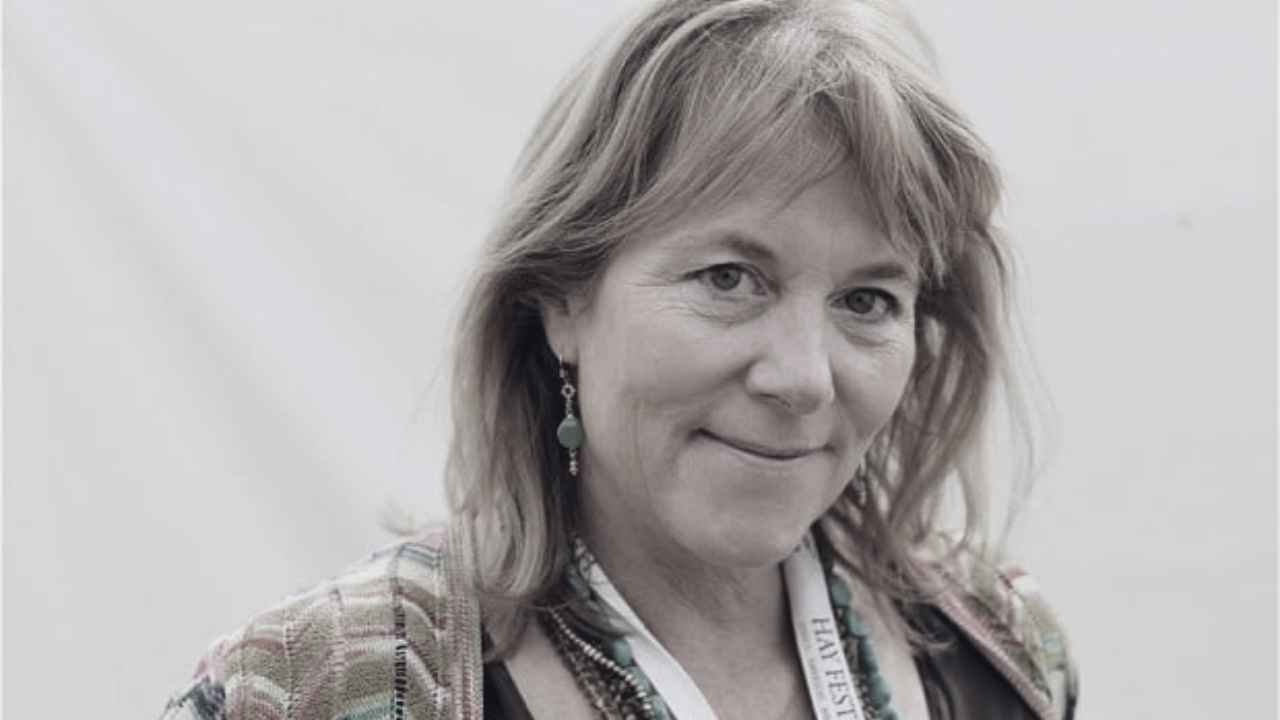

Hannah Rothschild Net Worth in 2025
In the annals of British high society, few names evoke as much intrigue, influence, and understated elegance as Rothschild. Hannah Mary Rothschild, born into this storied banking dynasty, has transcended the weight of her surname to forge a multifaceted career as a filmmaker, author, philanthropist, and trailblazing arts administrator. As the eldest daughter of the late Jacob Rothschild, 4th Baron Rothschild, and the former Serena Mary Dunn, Dame Hannah embodies a blend of inherited privilege and personal grit. Her journey—from directing documentaries for the BBC to becoming the first woman to chair the National Gallery’s board of trustees—offers a compelling narrative of reinvention. Yet, amid the glamour of her public life, questions about her personal wealth persist, with estimates of her net worth varying widely, often pegged between $20 million and $65 million as of 2025.
Early Life and Family Ties
Hannah Rothschild was born on May 22, 1962, in London, the beating heart of the Rothschild empire’s British branch. Her father, Jacob Rothschild, was a financier, philanthropist, and cultural patron whose own net worth once topped $1 billion before his passing in 2024. Her mother, Serena, hailed from the affluent Dunn family, known for their shipping fortune, adding layers of industrial legacy to Hannah’s upbringing. Raised alongside siblings Nathaniel, Beth, and Emily in the opulent surroundings of Ascott House in Buckinghamshire—a Rothschild estate turned National Trust property—Hannah grew up immersed in art, history, and intellectual discourse.
The Rothschilds, descendants of 18th-century German-Jewish banker Mayer Amschel Rothschild, have long been synonymous with global finance, philanthropy, and conspiracy-laden lore. Hannah’s paternal grandfather, Victor Rothschild, 3rd Baron Rothschild, was a scientist and MI5 advisor, while her great-aunt, Baroness Pannonica de Koenigswarter, became a jazz patroness and muse to Thelonious Monk. This eclectic family tapestry—spanning bankers, spies, scientists, and bohemians—profoundly shaped Hannah’s worldview. “Rothschild… It’s a huge name,” she once reflected in a 2021 interview with The Jewish Chronicle. “It walks into a room before you do.” Yet, far from being overshadowed, Hannah channeled this heritage into her own pursuits, navigating the expectations of aristocracy with a “restless, inquisitive mind.”
Educationally, she attended the progressive Bedales School in Hampshire, followed by Wadham College, Oxford, where she studied English literature. It was here that her passion for storytelling ignited, setting the stage for a career that would bridge film, literature, and the visual arts.
A Filmmaking Odyssey: From BBC to Storyville
Hannah’s professional odyssey began in the mid-1980s at the BBC’s Music and Arts department, where she started as a researcher before swiftly ascending to director. Her early credits included episodes of Saturday Review, Arena, and Omnibus, as well as initiating series like The Great Picture Chase and Relative Values. These projects honed her eye for the intersection of culture and narrative, blending historical depth with contemporary flair.
By the 1990s, Hannah had co-founded Rothschild Auerbach Ltd. with filmmaker Jake Auerbach, producing acclaimed documentaries, including profiles of artists Frank Auerbach, Walter Sickert, and R.B. Kitaj. Her 2008 HBO/BBC Storyville film The Jazz Baroness marked a personal milestone, chronicling the life of her great-aunt Nica—a rebellious Rothschild who abandoned European high society for the bebop scene of 1940s New York. The documentary, inspired by a radio program, delved into Nica’s relationships with jazz legends like Charlie Parker and Monk, earning praise for its intimate portrayal of family lore and cultural rebellion.
Hannah’s screenwriting credits further underscore her versatility: she penned scripts for Working Title Films and Ridley Scott, including contributions to Channel 4’s cinematic history. In 2010, she established the Artists on Film charity, promoting documentaries about visual artists—a nod to her lifelong advocacy for the moving image as a tool for art appreciation. Her lectures at institutions such as the Courtauld Institute, the Royal Academy, the Getty, and the Metropolitan Museum reflect this commitment, often exploring how film can democratize access to masterpieces.
Literary Ambitions: From Biography to Bestselling Fiction
Inspired by The Jazz Baroness, Hannah turned to the page. Her 2012 biography, The Baroness: The Search for Nica the Rebellious Rothschild (published by Virago), was a critical darling, hailed by The Daily Telegraph as “riveting, touching, and insightful.” It wove family memoir with jazz history, revealing Nica’s defiance of Rothschild conventions—from hosting jam sessions in her Park Avenue apartment to facing scandalous headlines about drug-fueled escapades.
Fiction followed suit. Hannah’s debut novel, The Improbability of Love (2015, Bloomsbury/Knopf), a satirical romp through the London art world, clinched the Bollinger Wodehouse Prize for comic fiction and was shortlisted for the Bailey’s Women’s Prize. Centered on a lost Watteau painting and its quirky provenance, the book drew on her insider’s gaze, earning raves from The Sunday Times: “Hannah Rothschild is finally coming into her own.” Her sophomore effort, House of Trelawney (2019), a gothic family saga, was runner-up for the Wodehouse Prize. These works, laced with wit and Rothschild-esque grandeur, have solidified her as a literary force.
Chairing the National Gallery: A Historic Tenure
Hannah’s most visible legacy is her stewardship of Britain’s artistic crown jewel. In 2009, she joined the National Gallery’s board after spotting an ad in The Guardian—a democratic entry point belying her blue-blood credentials. By 2013, she was liaison trustee for the Tate, and in August 2015, at age 53, she shattered glass ceilings as the first female chair of the National Gallery’s trustees, succeeding Mark Getty.
Her five-year term (until 2020) was transformative. Amid budget pressures and post-Brexit uncertainties, Hannah championed free admission, digital innovation, and outreach programs. She spearheaded high-profile acquisitions, such as a £31 million fundraising campaign for a Pontormo masterpiece, and fostered collaborations with contemporary artists. “She has defended the National Gallery’s interests with energy and imagination,” lauded then-director Nicholas Penny. Stepping down in 2019 (with an interim handover to Sir John Kingman), she remained chair of the American Friends of the National Gallery. Her contributions earned her a CBE in 2018 for services to arts and charity, followed by a DBE in 2024 for philanthropy.
Philanthropy and Business: Beyond the Spotlight
Hannah’s influence extends to the Rothschild Foundation, where she chairs efforts to preserve Waddesdon Manor, the opulent Buckinghamshire estate bequeathed to the National Trust. In 2018, she succeeded her father as chair of Yad Hanadiv, the family charity that advances Israeli institutions such as the National Library of Israel. She’s a trustee for the Illuminated River project and a non-executive director at RIT Capital Partners (her family’s investment firm) and Five Arrows Limited.
In business, her board roles at entities like Windmill Hill Asset Management (WHAM) reflect a Rothschild aptitude for finance, though she shuns the banking spotlight. Collectively, companies under her directorship boast £4 billion in net assets—a figure underscoring the family’s enduring clout, even if not solely attributable to her.
Personal Life and Net Worth: Wealth in Context
Hannah’s personal life mirrors her professional eclecticism. In 1994, she married William Lord Brookfield, a landowner and heir to a brewing fortune; the couple separated but shared three daughters: Mary Esther Rose, Clemency Ruth, and Nell Tomoka. Based in London, Hannah maintains a low profile on family matters, prioritizing privacy amid public scrutiny.
As for her finances, precise figures are elusive—Rothschild wealth is notoriously opaque, often conflated with the family’s collective $1 billion to $15.7 trillion empire (depending on the estimate). Individual assessments for Hannah range from $20 million (citing authorship and philanthropy) to $65 million (factoring investments and media earnings) as of 2025. These stem from book sales, film royalties, board stipends, and inherited stakes, though she downplays opulence: “I’m not interested in money for money’s sake,” she told Alain Elkann in 2017. Her wealth, modest by dynasty standards, fuels her giving—art, not avarice, remains her north star.
A Rothschild for the Future
At 63, Dame Hannah Rothschild continues to evolve. Recent projects include High Time, a forthcoming work blending memoir and cultural critique, and ongoing advocacy for artists via her trusts. In an era of cultural commodification, she stands as a bridge-builder: honoring Rothschild roots while pioneering paths for women in the arts. As she once quipped about her great-aunt Nica, “She was a rebel with a cause.” The same could be said of Hannah— a modern Rothschild, rewriting the family script with grace, grit, and a filmmaker’s unflinching lens.

WeeklyMinds.com is proud to feature an author who brings a wealth of knowledge and experience to our blog. Weekly Minds is an accomplished freelancer writer with 12 years of experience in the field.
WeeklyMinds.com has a passion for sharing insights and perspectives on political, news, technology, home improvement, interiors and many more. Their unique perspective on current affairs has been featured in numerous publications and they have been a guest speaker at college fests.
WeeklyMinds.com is also an avid interest in writing and reading and enjoys singing, music, shopping, travelling and some more. In their free time, they can often be found of reading the novels and various current topics.
We are thrilled to have Elia Scala as a contributor to WeeklyMinds and look forward to their continued insights and contributions to our blog.