

In a market in active recalibration, how collectors approach art – and who they trust to guide them – has fundamentally changed. A collection built with intention is now as valuable as the artworks themselves – functioning as a cultural statement, intellectual capital, and a long-term asset.
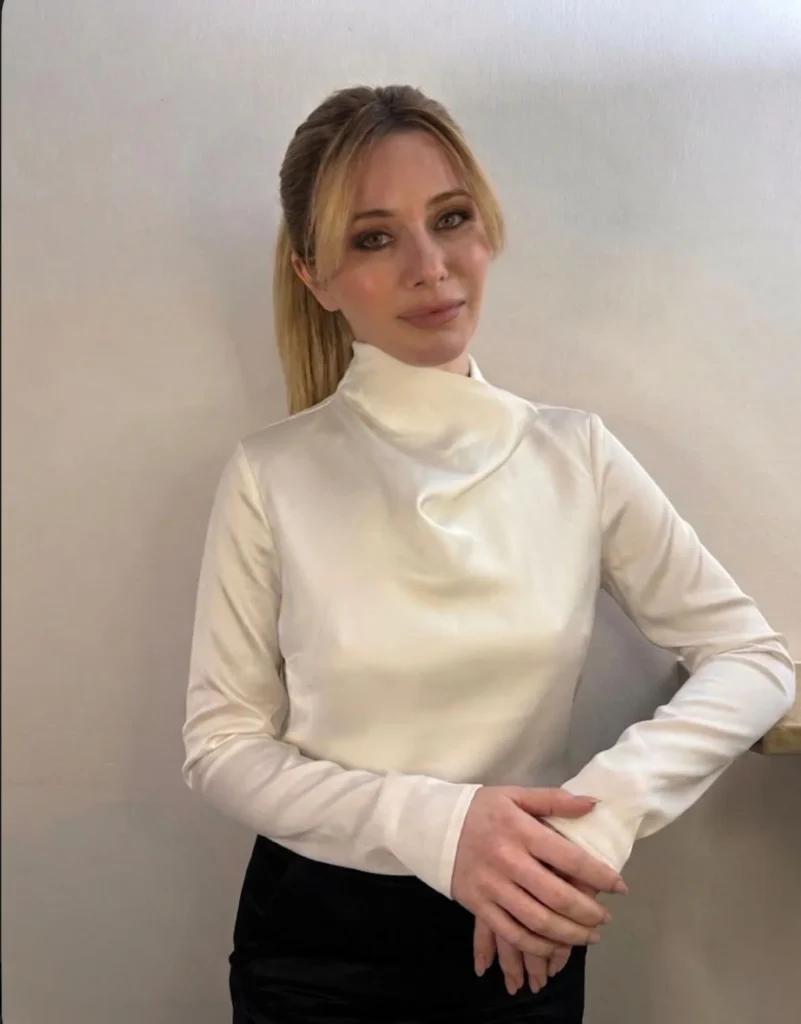
Kseniia Zarkhina spent years at the centre of the international art market, at Christie’s London, where she shaped partnerships with institutions and maisons including Gucci, Brioni, Perrier-Jouët, HSBC, and UBS, developing a rare vantage point: the intersection of private wealth, cultural capital, and the art world’s inner workings.
Through X·ZAR·Art, she brings that perspective to collectors and private wealth professionals, helping them engage with art not as a transaction, but as an ongoing intellectual and cultural practice.
On collection strategy, the shifting dynamics of the art market, and what it means to build something that lasts – read in this interview.
Beginning her career at Christie’s, Kseniia Zarkhina gained experience in the international auction world. Her trajectory later continued in collaborations with some of the world’s iconic maisons such as Gucci, Valentino, Graff, and Perrier-Jouët.
Today, through X·ZAR·Art, she operates as a trusted advisor to ultra-high-net-worth individuals, collectors, and institutions, guiding them in shaping thoughtful collections and unlocking the broader cultural and intellectual value of art.
About art as an asset class, collecting strategy, art governance, and the intellectual capital of art — read in this interview.
-What goes into acquiring a work of art – and what comes next?
The purchase is the shortest part of the process. Before it, there is research, relationship-building, and a clear understanding of where the work sits within the collection – or where it will take it. After, the work needs context and a professionalised infrastructure: how it is documented, stored, insured, and positioned within the larger narrative.
-Where does art fit in a serious wealth portfolio – and what does it offer that other assets don’t?
It operates on multiple levels at once; it can hold and build value, it diversifies outside traditional markets, and it passes between generations in a way few assets do. But unlike any financial instrument, it also carries cultural weight and becomes part of a family’s identity over time. That combination is what makes it genuinely irreplaceable in a serious portfolio.
-What does a collection built with intention look like?
You can walk through it and understand something about the person who built it. It has a point of view. The works speak to each other. It’s not defined by names or price points – it’s defined by coherence. A collection built with intention tends to grow in meaning over time, not just in value.
-How do you evaluate long-term potential in artists and artworks?
I look at the body of work first – whether there is genuine development or whether the artist is simply responding to market demand. Then institutional interest, not as validation but as a signal that serious curators are paying attention. Work that only makes sense in a commercial context rarely sustains.
-How does taste hold up against market logic – and should it?
The best collections are built where the two intersect. Pure market logic produces financially coherent but culturally empty collections. Pure taste without any market awareness is difficult to sustain. What I look for in a collector is conviction – the ability to know why they are drawn to something and hold that position through market noise.
-What mistakes do new collectors often make?
Buying what impresses rather than what moves them. Impression fades, it belongs to the moment, to the fair, to the excitement of the room. A work that genuinely moves you will still be asking you questions five years later. New collectors also tend to approach it as a series of individual purchases rather than the gradual construction of something with its own logic. That shift, from buying works to building a collection, is the most important one a collector makes.
-What makes a collection culturally meaningful, not just financially valuable?
Status, but not the kind money buys directly. When a collection enters an institution, appears in a catalogue, or shapes how a period is understood, it reflects back on the person who built it in a way no purchase alone can achieve. That kind of recognition is earned through discernment, not spending. The most significant collectors I can think of weren’t necessarily the wealthiest in the room. They were the ones who understood what they were looking at before everyone else did. That’s what a collection built with genuine intention can give you, and it’s irreplaceable.
-How is private wealth redefining its relationship with art?
The market’s return to growth in 2025, after two consecutive years of contraction, wasn’t accidental. The latest Art Basel and UBS report points to renewed confidence at the high end – auction sales rose 9%, and HNW collectors allocated an average of 20% of their wealth to art, up from 15% the year before. But what I notice in practice is a shift in the quality of the conversation. Less speculation, more intention. Family offices asking about governance and provenance the same way they would any serious asset. Wealth has become more serious about art.
-How do you see the role of art advisors evolving in the future?
The professional infrastructure around collecting is maturing fast – family offices, legal structures, long-term planning. But the more sophisticated the support around a collector, the more important it becomes to be clear about what that support is actually for. An advisor can open doors, filter noise, and bring rigour to decisions. What they can’t do is develop a collector’s own eye, their own argument, their own sense of what they’re building and why. The collectors whose collections endure are the ones who stayed close to those questions themselves. The advisor’s role is to make that easier – not to answer those questions for them.
-What advice would you give to the next generation of collectors?
Start with looking. Collect books about art before you collect art – build your eye, your references, your sense of what has lasted and why. And resist the pace the market suggests. The best collections are built slowly and with purpose. In today’s evolving art landscape, collecting has become a strategic exercise — where a collecting approach, deep knowledge, and long-term vision are as valuable as the artworks themselves. As a result, collectors increasingly seek guidance that goes beyond acquisition, focusing instead on building collections that function as cultural statements, intellectual capital, and long-term assets.

WeeklyMinds.com is proud to feature an author who brings a wealth of knowledge and experience to our blog. Weekly Minds is an accomplished freelancer writer with 12 years of experience in the field.
WeeklyMinds.com has a passion for sharing insights and perspectives on political, news, technology, home improvement, interiors and many more. Their unique perspective on current affairs has been featured in numerous publications and they have been a guest speaker at college fests.
WeeklyMinds.com is also an avid interest in writing and reading and enjoys singing, music, shopping, travelling and some more. In their free time, they can often be found of reading the novels and various current topics.
We are thrilled to have Elia Scala as a contributor to WeeklyMinds and look forward to their continued insights and contributions to our blog.