

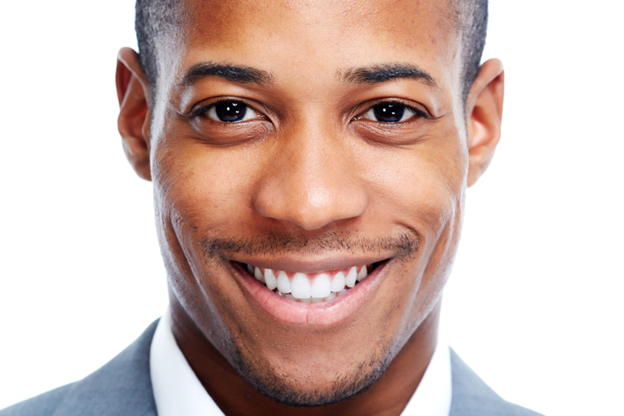
The Anatomy of a Smile Makeover
A smile makeover is not a single procedure but a bespoke choreography of several cosmetic and restorative treatments, orchestrated to produce a unified aesthetic result. At its most elaborate — what practitioners now call a full-mouth rehabilitation or a “smile design” — the process can involve porcelain veneers, composite bonding, teeth whitening, gum contouring, orthodontics, dental implants, and jaw reshaping, all planned using three-dimensional imaging software before a single tool touches enamel.
Veneers — wafer-thin porcelain shells cemented to the front surface of teeth — remain the signature element of most smile makeovers. They can correct colour, shape, spacing, and minor misalignment simultaneously, and modern ceramic materials are so optically convincing that even trained clinicians sometimes struggle to distinguish them from natural teeth in photographs. It is this photographic credibility that has driven much of their recent popularity: veneers, in the age of the selfie, are essentially a permanent Instagram filter for the mouth.
Alongside veneers, composite bonding — a tooth-coloured resin sculpted and cured directly on the tooth — has grown in popularity as a less invasive and considerably cheaper alternative, particularly among younger patients who are reluctant to have healthy enamel removed. Digital smile design software, which generates a photorealistic simulation of the expected outcome before treatment begins, has also transformed the consultation process, allowing patients to co-create their result and reducing post-treatment dissatisfaction.
Celebrity Culture and the Veneer Discourse
No force has accelerated the mainstreaming of smile makeovers quite like celebrity culture’s increasing transparency about cosmetic procedures. For decades, stars submitted to dentistry in silence, the results attributed to “good genes” or diligent oral hygiene. That omertà has gradually dissolved. Fans, journalists, and a cottage industry of cosmetic dentistry commentators now routinely scrutinise red-carpet appearances and social media posts for evidence of recent dental work, and the conversation has migrated from gossip columns into mainstream discourse.
Singer and television personality JoJo Siwa’s widely circulated smile transformation became one of the most discussed cosmetic dentistry stories of recent years. Reports placed the cost of her alleged veneers at around $50,000 — a figure that prompted equal parts admiration, scepticism, and aspiration among her tens of millions of followers. The episode was instructive: it demonstrated not merely that celebrities were spending extraordinary sums on their teeth, but that their audiences were paying close attention and drawing conclusions about the relationship between appearance, investment, and self-reinvention.
The effect on consumer behaviour has been measurable. Cosmetic dentists in major cities report that patients increasingly arrive at consultations with photographs of specific celebrity smiles saved on their phones, requesting results that mirror a particular shape, shade, or degree of translucency. The democratisation of aspiration, enabled by social media’s intimacy, has turned the celebrity smile from an abstract ideal into a concrete, orderable product.
What a Perfect Smile Costs — And Who Is Paying
The economics of smile makeovers operate across an extraordinary range. At the entry level, professional whitening and basic composite bonding can be achieved for a few thousand dollars or rupees, placing some degree of cosmetic improvement within reach of middle-income earners. At the apex of the market, a comprehensive full-mouth makeover at a prestigious practice in New York, Los Angeles, London, or Dubai — involving custom-fabricated porcelain restorations, gum surgery, and bespoke shade matching — can comfortably reach $100,000, or approximately ₹95 lakh at current exchange rates.
Those paying are no longer a narrow demographic. Cosmetic dentists in metropolitan markets describe a patient base that now spans corporate professionals seeking an edge in video-call-heavy workplaces, college students investing in their social presence, content creators for whom the camera is both their studio and their livelihood, and couples approaching their wedding dates. The Zoom effect — the sudden, sustained exposure to one’s own face during the pandemic years, and the persistence of remote working thereafter — is widely credited by practitioners with accelerating demand across all age groups.
India’s Smile Design Boom
Nowhere is the growth of cosmetic dentistry more striking than in India, where a confluence of rising disposable incomes, an explosion of visual social media culture, and a generation of internationally trained dentists returning home with advanced technical skills has produced a market that is both expanding rapidly and diversifying in extraordinary ways. Smile design clinics — practices dedicated specifically to aesthetic dental outcomes, often equipped with digital imaging systems, ceramic milling machines, and treatment-planning software — have proliferated in Delhi, Mumbai, Bengaluru, Hyderabad, and Chennai over the past decade, and increasingly in Tier-2 cities as well.
The cost of a single veneer at an Indian clinic can range from around ₹8,000 at a competent but modest practice to ₹1.5 lakh or more at a top-tier cosmetic centre in South Mumbai or South Delhi, where the combination of imported materials, cutting-edge technology, and the reputation of the treating dentist commands a significant premium. This spread means that smile makeovers, while still a luxury by most Indian income standards, are accessible to a far wider swathe of the population than they once were, and the market for mid-range cosmetic dentistry in India is one of the fastest-growing in Asia.
Social media has played a direct and traceable role in this expansion. Cosmetic dentists in Indian metros report that a substantial proportion of new patients arrive as a direct result of before-and-after content encountered on Instagram or YouTube — either from practitioners marketing their own work or from patients sharing their own transformation journeys. The visible, photographable nature of dental results makes the smile makeover uniquely well-suited to social media marketing, and savvy clinics have built considerable followings on the strength of transformation photography alone.
The Ethics and Anxieties of the Perfect Smile
The industry’s remarkable growth has not been without its critics. Dental ethicists and consumer advocates have raised concerns about the irreversibility of veneer preparation, which in traditional techniques requires the removal of a small but permanent amount of healthy enamel — a sacrifice that, in a young patient pursuing a cosmetic outcome rather than a clinical one, represents a significant long-term commitment whose implications may not be fully appreciated at the time of treatment. The rise of “no-prep” or “minimal-prep” veneers has addressed some of these concerns, but the more aggressive preparations still dominate at the premium end of the market, where dramatic transformations are expected.
There are also questions about the influence of aspirational content on the formation of unrealistic expectations. Cosmetic dentists note that the smiles most frequently presented as references — saturated with reflected light, uniformly white, geometrically precise — often reflect highly controlled photography conditions, digital post-processing, or the idiosyncrasies of a particular face rather than an achievable universal standard. Practices that invest seriously in digital smile design software make a point of showing patients simulations of their own face rather than a generic template, precisely to manage the gap between aspiration and anatomical reality.
Mental health practitioners have begun to flag the intersection of cosmetic dentistry with broader anxieties about appearance in an image-saturated culture. The concept of “smile dysmorphia” — a subset of body dysmorphic disorder in which individuals perceive profound flaws in teeth that appear objectively normal or even attractive to others — is increasingly documented in clinical literature, and responsible practitioners describe a growing imperative to screen patients for unrealistic expectations and underlying psychological distress before proceeding with irreversible treatment.
Smile Tourism and the Global Arbitrage of Dentistry
One of the more striking phenomena produced by the global appetite for smile makeovers is the emergence of dental tourism as a significant economic force. Patients from the United Kingdom, the United States, Canada, and Western Europe routinely travel to Turkey, Hungary, Mexico, Thailand, and increasingly India to access treatments that are clinically equivalent to those available at home but cost a fraction of the local price. Istanbul’s Dental Tourism district has become something of a global pilgrimage site for the veneer-curious; the city reportedly receives hundreds of thousands of dental tourists each year, many of them arriving specifically for smile makeovers.
India, with its combination of highly trained English-speaking dentists, internationally accredited facilities in major cities, and dramatically lower costs even compared with other dental tourism destinations, has positioned itself as an increasingly attractive option in this market. Several dedicated dental tourism agencies now operate in India, handling the coordination between international patients and treating clinics, arranging accommodation, and providing aftercare support — a model that packages the entire experience as a medical travel product rather than a mere clinic visit.
The arbitrage is substantial: a full smile makeover that might cost $25,000 in the United States can often be completed to a comparable clinical standard in India for ₹3–5 lakh, even after accounting for flights and accommodation. For patients with extensive treatment needs, the saving is large enough to make an overseas trip not merely sensible but essentially financially compulsory.
The Future of the Smile
The technologies emerging from cosmetic dentistry’s research pipeline suggest that the industry is still in its relative adolescence. Artificial intelligence-assisted smile design software is already capable of generating treatment proposals from a simple photograph, mapping the patient’s facial geometry and proposing veneer shapes calibrated to their specific proportions. Computer-aided design and manufacturing systems can mill a ceramic veneer in under an hour from a digital scan, eliminating the traditional two-week laboratory wait. Bioactive materials that can bond to enamel with minimal preparation, and experimental approaches to enamel remineralisation that might one day allow colour correction without any removal of tooth structure at all, are advancing steadily through clinical trials.
What seems less likely to change is the underlying cultural pressure that drives demand. The visual economy shows no signs of abating — if anything, the continued spread of short-form video, augmented reality filters, and increasingly immersive social platforms suggests that the scrutiny of personal appearance will only intensify. In that environment, the smile — visible, expressive, immediately legible as a signal of health, youth, and confidence — is unlikely to lose its significance as a focus of investment and aspiration.
The ancient human instinct to put one’s best face forward has simply acquired a new set of tools — and an entirely new set of price points. From the dental tourism clinics of Istanbul to the smile design studios of South Mumbai, from the veneer laboratories of Beverly Hills to the composite bonding suites opening in Tier-2 Indian cities, a global industry has arisen to serve it. The smile, once inherited and accepted, has become something that can be designed, purchased, and refined — a symbol, now more than ever, of who we choose to be.

WeeklyMinds.com is proud to feature an author who brings a wealth of knowledge and experience to our blog. Weekly Minds is an accomplished freelancer writer with 12 years of experience in the field.
WeeklyMinds.com has a passion for sharing insights and perspectives on political, news, technology, home improvement, interiors and many more. Their unique perspective on current affairs has been featured in numerous publications and they have been a guest speaker at college fests.
WeeklyMinds.com is also an avid interest in writing and reading and enjoys singing, music, shopping, travelling and some more. In their free time, they can often be found of reading the novels and various current topics.
We are thrilled to have Elia Scala as a contributor to WeeklyMinds and look forward to their continued insights and contributions to our blog.