


Introduction
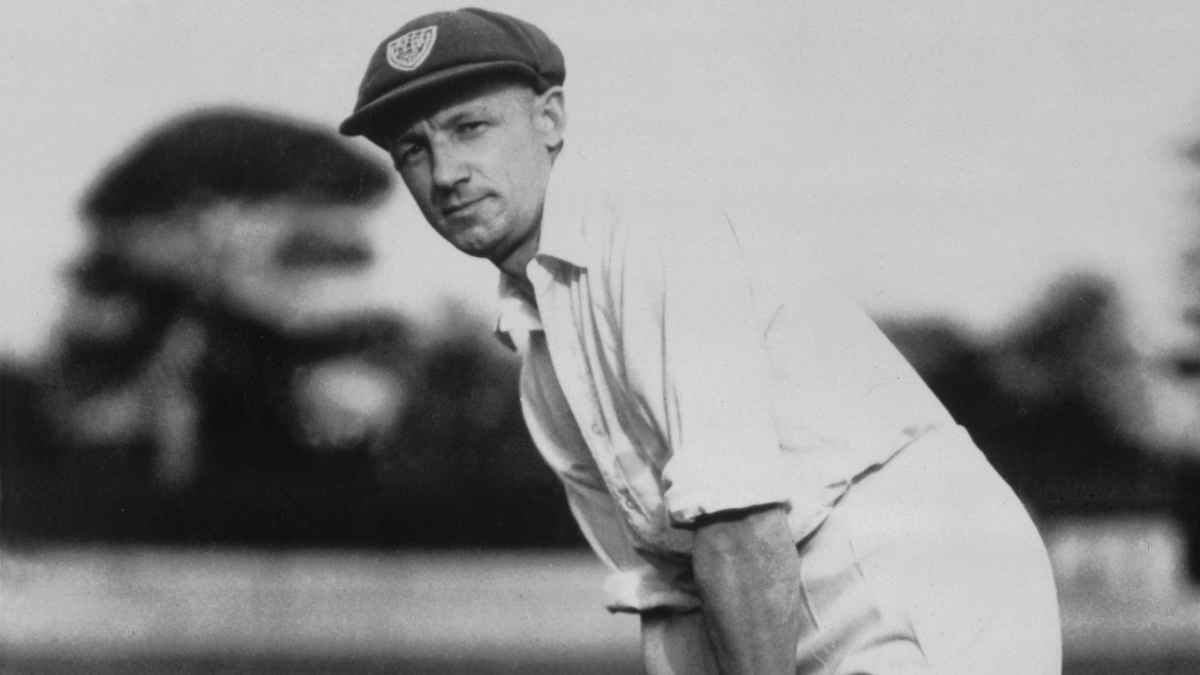
Sir Donald George Bradman (“The Don”): A Cricket Legend and Australian Sports Hero For sure cricket’s greatest batsman and surely one of the most lauded Australian athletes ever produced is Sir Donald George Bradman. Born on 27 August 1908 at Cootamundra, NSW, and died on 25 Feb 2001 at the age of 92 in Adelaide, South Australia, Bradman will forever be remembered for his legendary Test batting average of 99.94. An achievement that continues to elude and astonish sports statisticians the world over is his career of getting a run on every Test match he played, and at the same time, only losing two of them. These kinds of batting averages have never been achieved before or after, and Bradman himself never came so close.
Taking only 9 years at cricket, from 1928 to 1948, he amassed an unprecedented total of 5,076 Test Runs in 52 matches, hitting 17 centuries along the way while guiding and winning Australia’s 48 Test series against England on the 1948 tour. Besides his incredible stats, Bradman also represented the heart and soul of the nation during the years of economic hardship the Great Depression had brought and the wartime periods of the early 1940s. The way he became a national hero and In reality his rise coincided with periods of great challenges for Australia made his story even more inspirational. He was the embodiment of a self-made cricketing genius rising from modest backgrounds. Even the simplest of materials like a golf ball and a cricket bat would be a substitute for his tools of playing the game as a country boy.
Sir Don Bradman Biography
| Category | Details |
|---|---|
| Full Name | Donald George Bradman |
| Nickname | The Don, The Boy from Bowral, Braddles, The White Headley |
| Birth | 27 August 1908, Cootamundra, New South Wales, Australia |
| Death | 25 February 2001, Kensington Park, South Australia, aged 92 |
| Height | 1.70 m (5 ft 7 in) |
| Batting Style | Right-handed |
| Bowling Style | Right-arm leg break |
| Role | Batsman |
| Test Career | 1928–1948 (Australia) |
| Test Debut | 30 November 1928 vs England |
| Last Test | 18 August 1948 vs England |
| Domestic Teams | New South Wales (1927–1934), South Australia (1935–1949) |
| Career Runs | 6,996 (Test), 28,067 (First-class) |
| Batting Average | 99.94 (Test), 95.14 (First-class) |
| Centuries | 29 (Test), 117 (First-class) |
| Highest Score | 334 (Test), 452* (First-class) |
| Military Service | Lieutenant, Australian Army & RAAF, 1940–1941, WWII |
| Family | Married Jessie Menzies (1932); 3 children including John Bradman; granddaughter Greta Bradman (opera singer) |
| Post-Career | Cricket administrator, national selector, stockbroker, author |
| Legacy | Led “The Invincibles” (1948 Ashes tour, unbeaten); inspired “Bodyline” tactics; remains a national icon of Australia |
Early Life & Education
Donald George Bradman was a farm boy, a carpenter’s kid and the father’s youngest of five children. His parents, George Bradman and Emily (neWhatman) moved the family from Cootamundra down to a tiny village Bowral in theSouthern Hillsregion of New South Wales when Don was only two years old or so. It was there, in a simple dwelling nearby the locality cricket field, that a boy who was destined to greatness began to train a bit in his amazing hand-eye coordination ability that he later on would make famous. All these years he used to throw and hit a golf ball over a water tank stand using only one cricket stump. That’s how he developed one of the great athletic skills of all times. His schooling began at Bowral Public School and then his journey continued at Intermediate High School where, alongside his academic brilliance he also discovered a love for playing the piano.
Despite this potential combination, Bradman decided to drop out of secondary school at age 14 to find a job at a local estate agency. The cricket field soon became his main playground. Already at the tender age of 12 years he scored his first century for the school team, and by his late teenyears he was the local amateur cricketing club’s star performer, including a 234 against Wingello and a district-record 300 against his schoolmates. These outstanding performances attracted the interest of selectors who represented the state and led naturally to his swift ascent to the Australian national cricket team.
Career
Bradman’s first-class appearance in New South Wales came as a 19-year-old teenager during the 1927-28 season by scoring a hundred. After that, his first Test came off the heels of the 1928-29 Ashes series against England, which was coincidentally one of his first major sporting battles. Although he only made a moderate score initially a first Test hundred of 112 in Melbourne heralded Bradman’s presence to be reckoned with. Australia had an England tour in 1930 that made the player into a worldwide sensation. During that Ashes series he scored an incredible 974 runs in 9 innings with one not-out at an average of 139.14 and that including a high score of131 254 334 (then world record), and 232.
Taking to its extreme the Bodyline series of 1932-33 when England used aggressive cricketing strategies of targeting the players’ body with bouncer shots was a major challenge for Bradman, but despite being at such disadvantage the player still managed an average of 56.57 that season. From the year 1935 onwards, he moved to Adelaide to play for South Australia and became the captain of the team and the national side. After the break of the wartime and when he was discharged medically, he still kept playing cricket but the war years left a mark.
He was first commissioned into the Royal Australian Air Force and then into the 21st Australian Infantry after that. The war years didn’t make him lose the fire from his game and Bradman once again became captain of his country and played great cricket. The 1948 tour of England with the Invincibles will remain forever the most famous of the last major sporting tours of this great man. This time the Invincibles remained undefeated during the entire British Isles tour and the great batsman Bradman continued his great batting performance until finally, on his last Test innings he got bowled, leaving his career average at only one thousandth of a percentage less than a perfect figure of100.
In total, he took part in only 234 matches where he scored 28,067 runs averaging a very impressive score of95.14 for which he also received 117 centuries to his name. One of these is Most of all memorable to Bradman as he got 452 not out which was a world-record for a time he was playing from New South Wales against Queensland in1930. It is this particular blend of focus and footwork with a consistent, non-stop run production that has made a mark that is second to none even till the present times.
Personal Life
Beyond the cricket pitch, life for Bradman was pretty much an offbeat one where he spent time only with a few selected people and followed a strict lifestyle. He permanently made Adelaide his home in the mid-1930s, and he set up a profitable stockbroker practice there. It was after the failure of his employer’s company through criminal means in 1945 that Bradman opened up his own brokerage service, and then in the aftermath of leaving full-time business in 1954, he continued to work as a director in different companies. He also took an active part in the management of cricket by becoming an Australian Board of Control member for a considerable period and a national selector on one occasion. Privacy and family held more value with Bradman than popularity. He turned more isolated with years as it became harder to maintain a lively correspondence or pursue leisurely activities like golf and music amidst the constant publicity.
Beyond his personal qualities, these were the things that most endeared people to Bradman, his honesty, his being down to earth, and his devotion to the time-honored traditions of the game. And all, be it in the company of other players or alone, he remained greatly respected by people everywhere for his conduct.
Relationships
Bradman’s most significant personal connection was with Jessie Martha Menzies. The two of them met when she was staying at Bradman’s house in Bowral where Bradman was a student at that time. She was a young girl at that time and he was still a boy. Jessie died in March 1997 after battling a cancer-related illness. Their wedding was on the 30th of April, 1932 at the Church of England’s St. Paul’s in Burwood, Sydney. They remained devoted partners for 65 years, until Jessie’s death. Bradman referred to Jessie as his life’s greatest source of inspiration, as well as the support for his achievements, more than once.
The couple went through major family difficulties. Their first son Ross died two days after being born in 1936. Their second son, John (born 1939), contracted polio as a child but made a full recovery before eventually entering the academic field of study; for a period, he used the surname Bradsen before changing it back to Bradman. Shirley, their daughter (born 1941), had the misfortune of cerebral palsy from birth followed by her deafness. Yet, despite being handicapped, she managed and was always full of energy. Family bonds became strong in later life, despite occasional tensions – Mostly with his son when John was still a young man. John eventually turned around and became the main public voice for the family legacy after Dad died.
Awards and Achievements
Bradman had a lot of honours. He was knighted through the 1949 New Year Honour, which was a great achievement to do for the first Australian cricketer to get a knighthood. In 1979, he was recognized as a Companion of the Order of Australia, one of the country’s greatest awards for civilians. He was the first Sportsmen to enter the Sport Australia Hall of Fame in 1985, became the only cricketer to enter the Australian Cricket Hall of Fame in 1996, and in 2009 was honored by the ICC Cricket Hall of Fame.
He was also recognized internationally as being one of Wisden’s five Cricketers of the Century in 2000, the only one that was chosen unanimously. His records are still amazing today: the highest Test batting average with minimum 20 innings, most Test centuries by double (12), most Test singles in one series – by runs (974), and many others that have been left untouched for decades after he retired. Besides that, he got a lot of local honor as well including the museum in Bowral that was More exactly built for him and that opened while he was still alive, the stamps on the mail, and the coins issued in his honor.
Conclusion
Sir Donald Bradman lived the embodiment of brilliance, effort, and humble grace. He started as a child playing at the dusty fields of Bowral where later he played in the major cricket games of Lord’s and Melbourne Cricket Ground. What he achieved through the cricket bat was really amazing for the whole world of cricket. The Bradman’s Test average, 99.94, is still the one of the highest ever. His great captain ship of the Invincibles and, in addition, his work to the sport’s administration, have placed him as a giant not only in the sports world but also in the Australian culture. Poor Bradman still brings to mind the national pride, as well, as a source of strength for people who appreciate getting to the top by sheer dedication and honesty.

WeeklyMinds.com is proud to feature an author who brings a wealth of knowledge and experience to our blog. Weekly Minds is an accomplished freelancer writer with 12 years of experience in the field.
WeeklyMinds.com has a passion for sharing insights and perspectives on political, news, technology, home improvement, interiors and many more. Their unique perspective on current affairs has been featured in numerous publications and they have been a guest speaker at college fests.
WeeklyMinds.com is also an avid interest in writing and reading and enjoys singing, music, shopping, travelling and some more. In their free time, they can often be found of reading the novels and various current topics.
We are thrilled to have Elia Scala as a contributor to WeeklyMinds and look forward to their continued insights and contributions to our blog.