

Introduction
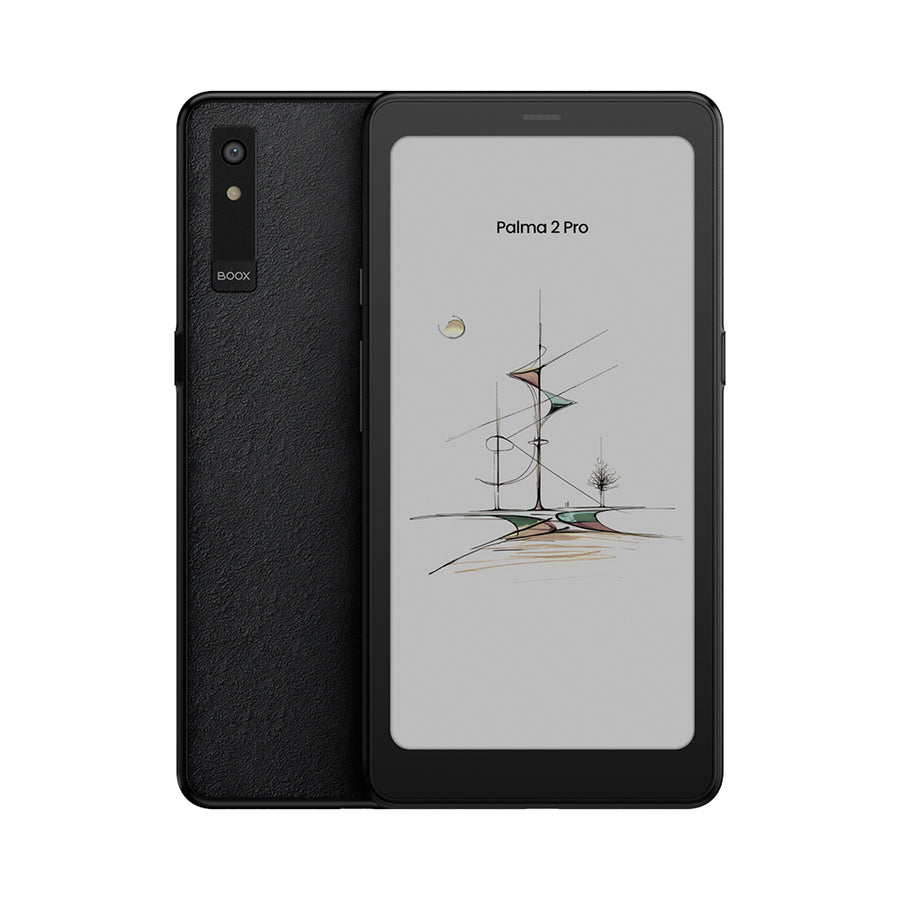
The BOOX Palma 2 Pro emerges as a distinctive device that straddles the line between a smartphone and an e-reader. With a 6.13″ colour ePaper display, full Android operating system, 5G data support, and stylus compatibility, it’s positioned as a “mobile ePaper” device designed for reading, note-taking and light media use, while prioritising comfort and portability.
Below we dive into what makes it special, where the compromises lie, and who it’s best suited for.
Key Specifications
Here’s a breakdown of the major specs:
- Display: 6.13″ E Ink Kaleido 3 colour ePaper panel (supports 4,096 colours)
- Resolution: In black & white mode: 824 × 1648 (300 ppi) / In colour mode: 412 × 824 (150 ppi)
- Processor & memory: Octa-core CPU with “BOOX Super Refresh (BSR)” technology; 8 GB RAM + 128 GB internal storage
- Connectivity: WiFi + Bluetooth 5.1; supports 2G/3G/4G/5G (data-only SIM) via a hybrid SIM slot.
- Stylus support: Compatible with BOOX InkSense Plus stylus (sold separately) for note-taking/sketching.
- Battery: 3,950 mAh Li-polymer, USB-C port, fingerprint sensor, dual speakers & microphones.
- Dimensions & Weight: Approximately 159 × 80 × 8.8 mm, ~175 g.
- Operating System: Android 15 with Google Play Store pre-installed — giving full app flexibility.
What’s Very Good
1. Ultra-portable form factor
At ~175 g and roughly the size of a smartphone, the Palma 2 Pro is truly pocket-friendly (or at least bag-friendly). If you carry a smartphone everywhere, this feels natural for long reading sessions or travel.
2. Colour ePaper display
The Kaleido 3 colour ePaper gives the ability to display colour — useful for magazines, comics, colour graphs, highlight-coloured text — plus it retains an e-ink “paper-like” feel, particularly in black & white mode.
3. On-the-go connectivity
Unlike many e-readers which are WiFi-only, this device supports 5G data (via data-only SIM) plus GPS/A-GPS. You can download books, sync content, stream audio — without relying solely on WiFi hotspots.
4. Open Android ecosystem
Running Android 15 with Google Play means you’re not locked into a proprietary reader ecosystem. You can install your preferred apps: Kindle, Kobo, Pocket, RSS readers, podcasts, audiobooks. That breadth gives flexibility.
5. Note-taking & stylus support
With support for the InkSense Plus stylus (4,096 levels of pressure), the device doubles as a pocket-sized digital notebook. Great for jotting thoughts, annotating PDFs or ebook margins.
Where It Falls Short / Trade-Offs
1. Colour resolution & text sharpness in colour mode
Because colour mode uses 150 ppi and a filter layer (typical of many Kaleido displays), fine text or small print can appear less sharp compared to high-end monochrome eInk readers. As one review noted:
“The lower pixel density makes any small text essentially unreadable… I’ve … still can’t get it to the point I like looking at it.”
2. Screen brightness & refresh limitations
Colour e-ink tends to be dimmer than backlit LCD/AMOLED, and in complex layouts or dynamic content (like web browsing), the refresh can lag. So it’s excellent for reading & static content, less so for heavy web/video use. With colour, you may find you need to crank the front-light.
3. Small screen for certain use-cases
At 6.13″ the display is compact — excellent for books or reading on the move, but potentially cramped for PDFs, comics, large-format documents, spreadsheets, or serious note-taking/drawing compared to larger tablets. The review from Los40 noted:
“…for the comic format the size suffers … dragging of zoom and panning is required…”
4. Price & niche use-case
Priced at around US $399.99 (≈ €399.99) in official stores. For many typical e-reader users (mostly reading plain text books), this may be overkill compared to monochrome readers under US $200. So its appeal is strongest for those who will exploit its advanced features.
Who Should Consider It?
This device is especially well-suited for:
- Avid readers who want one lightweight device they can carry everywhere, rather than a full tablet + reader + phone.
- Professionals/students who read a mix of text, colour content, annotate documents and sometimes use mobile data to sync or access content.
- People who dislike backlit screens and want a more eye-comfortable device for reading, with the flexibility of colour when needed.
- Users who prefer an open Android ecosystem (installing apps freely, not locked to a proprietary reader store).
It’s less ideal for:
- Users whose main activity is watching video, gaming or heavy web browsing (colour eInk refresh & brightness limit).
- Readers of large-format PDFs/academic papers who may prefer a larger screen.
- Budget-conscious users whose reading needs are basic — they could get away with more affordable monochrome eReaders.
Verdict
The BOOX Palma 2 Pro is a compelling and unique offering in the eReading space — a smartphone-sized device combining a colour ePaper display, full Android flexibility, mobile data, and stylus support. It stands out for portability, connectivity and versatility. That said, the colour mode comes with inherent compromises (150 ppi, lower brightness) and the compact size may not suit every reading/drawing scenario. If you recognise exactly the scenarios it is strong in, it could be an excellent investment. Otherwise, evaluate whether a larger device or cheaper monochrome eReader meets your needs better.