

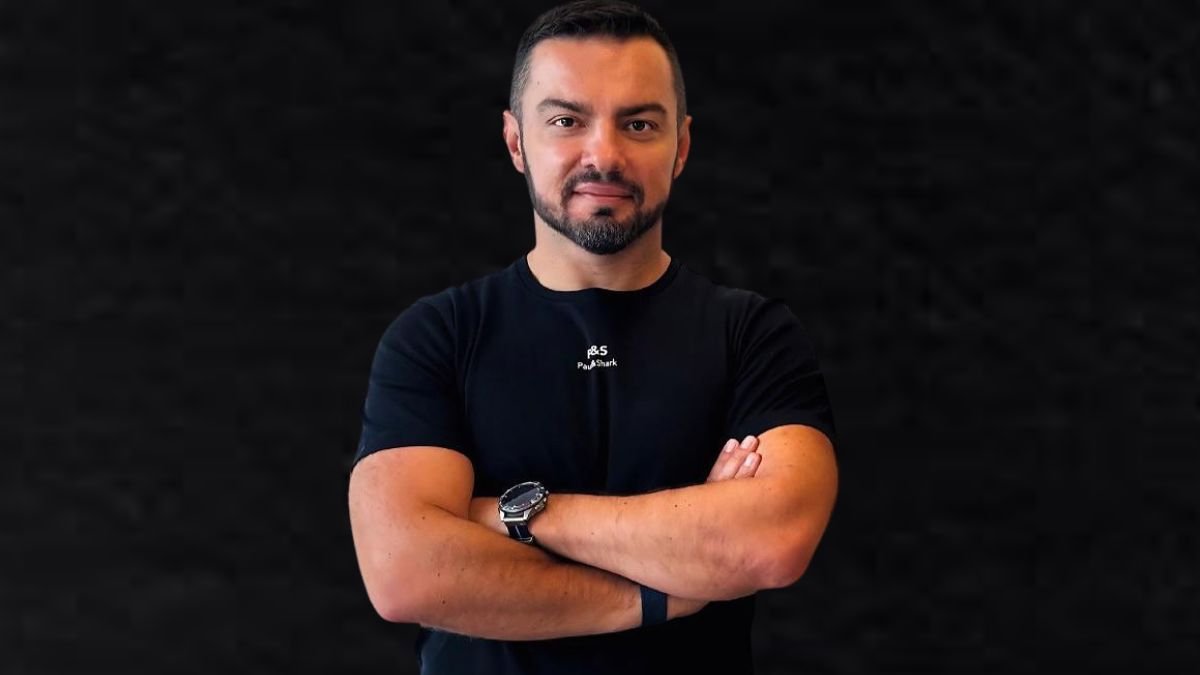

Yury Smagarinski is the CEO of Yoola, a global creator-centric ecosystem focused on helping digital creators and artists grow, distribute, and monetize their content across multiple platforms, with a network comprising more than 4,000 creators.
With more than 10 years of proven leadership across video streaming and digital media, Yury has significant experience at the intersection of technology, media, and creator economy. He played a key role in expanding Yoola internationally and developing a comprehensive infrastructure for creators, combining advanced fintech payout solutions, direct platform partnerships and a creator-first UX.
What originally drew you to this industry of creator economy?
My background has always been at the intersection of massive scale and user experience. Before the creator economy, I worked in the streaming industry, scaling to 50 million MAU. To me, the creator economy represents the next phase — more streaming, deeper audience engagement, and more complex platform structures.
What drew me to the creator economy was the realization that creators were becoming the new: they are the infrastructure through which content reaches billions of people. I saw an opportunity to apply my experience in building scalable infrastructure to empower individual creators, turning what was often a passion project into a sustainable, global business. I also enjoy working in environments that are challenging, dynamic, and full of opportunities — the creator economy is exactly that.
How has the creator economy changed since Yoola first launched?
When Yoola first launched, the creator economy was essentially the “YouTube economy.” It was a single-platform world where success was defined by AdSense revenue and subscriber counts. Today, it is a multi-platform, multi-revenue-stream ecosystem. Creators are now media moguls in their own right, distributing content across TikTok, Spotify, YouTube, and emerging platforms simultaneously. We’ve also seen a massive professionalization. Back then, a creator was often a solo act with a camera. Now, we see teams, studios, and complex brand partnerships. Yoola grew alongside the creator economy and continues to evolve with it. Our growth has always been a direct reflection of what creators need at each stage of their journey. We didn’t pivot away from our roots, we grew with our creators.
What do you see as the biggest challenge for creator-focused companies today?
The biggest challenge is trust and transparency. The creator economy has historically been plagued by a lack of clarity—opaque revenue shares, delayed payments, and misaligned incentives. For a company like Yoola, the challenge is to build a business model where we succeed only if the creator succeeds. We are not a venture capital firm taking equity; we are an operating partner. In an industry that moves as fast as this one, companies often prioritize growth over fiduciary responsibility to the talent. The companies that endure will be those that put creators’ interests at the center of everything they do.
What is the biggest challenge for creators today and how Yoola comes up with solutions to it?
The biggest challenge for creators today is administrative overload and financial fragmentation. Successful creators are not just making videos, they are managing a small-to-medium enterprise. They are dealing with dozens of revenue streams, digital royalties, brand deals, performance royalties, sync licenses, spread across 20 different dashboards and 10 different currencies. They often lack the time to optimize for tax efficiency or global reach. With all this complexity, it becomes incredibly difficult for creators to focus on what they are truly great at: creativity, ideas, and staying ahead of trends.
At Yoola, we solve this by building a “creator-first UX” that aggregates complexity. Our infrastructure combines advanced fintech payout solutions to ensure creators get paid quickly, accurately, and globally, regardless of where their revenue comes from. We handle the legal, financial, and administrative backend so that creators can focus entirely on what they do best: creating.
What is your long-term vision for Yoola?
As I’ve mentioned previously, we are growing alongside the market and evolving with the needs of creators. Today, our focus is expanding beyond infrastructure and into areas that help creators make smarter decisions. We are looking closely at how we can support creators in identifying and acting on trends, because in this industry, timing is everything. We are investing heavily in analytics that benefit all participants in the ecosystem, giving creators and partners the insights they need to grow strategically.
We are also actively developing our music direction, recognizing that musicians and artists have unique needs when it comes to distribution, rights management, and monetization. At the same time, we are expanding into new high-growth markets, bringing Yoola’s infrastructure and expertise to creators in regions where the creator economy is still emerging but showing tremendous potential. Our long-term vision is about being wherever creators need us, providing the tools and support they need to turn their creativity into sustainable careers.
How do you see AI impacting creators and the music industry?
AI is one of the most transformative forces we’ve seen in this sector. For creators and the music industry, it offers incredible opportunities but also raises important questions. On the practical side, AI is already helping creators break down barriers, whether through intelligent dubbing that makes content accessible to global audiences, or through production tools that allow musicians to experiment and create without needing expensive in-studio time.
At Yoola, we see AI as a tool that empowers creators, not replace them. We are exploring AI-driven solutions that help with localization, content optimization, and trend analysis, allowing creators to focus more on their craft. In the music industry specifically, we believe AI will open up new forms of creativity, but we also recognize the need to ensure that artists are fairly compensated when their work contributes to AI training. Our approach is always creator-first: we use AI to give creators more control, more efficiency, and more opportunities to grow.
What will the creator economy look like in five years?
In five years, the creator economy will be more professionalized, more global, and more diversified. We will see creators operating as full-fledged media companies, with teams, multiple revenue streams, and audiences spread across platforms and geographies. The lines between different types of creators, musicians, video creators, writers, artists, will continue to blur, and success will come to those who can build sustainable businesses around their creativity.
We also expect to see significant growth in emerging markets, where new audiences and talent are coming online every day. We are already witnessing phenomena like Nollywood and Bollywood demonstrating the immense power of localized content with global appeal. The creator economy will follow a similar trajectory—creators from regions like Africa, South Asia, and Latin America will build massive, loyal audiences without needing to cater to Western markets first. Platforms and infrastructure companies that can support these creators with localized tools, payment solutions, and market insights will thrive. At Yoola, we are positioning ourselves to be a key player in this global expansion, ensuring that creators everywhere have access to the same opportunities regardless of where they are based.
What exactly differentiates Yoola from other platforms?
We combine scale with a boutique approach by working closely with our creators, understanding their unique needs and providing personalized support, while still leveraging the infrastructure of a global company. We also bring deep experience in emerging markets, having grown alongside creators in regions that are often overlooked by other players. This offers us an understanding of the opportunities and challenges in these high-growth markets.
And at our core, we have a genuine love for technology. We are constantly exploring how fintech, data analytics, and AI can solve real problems for creators. Whether it’s building smarter payout systems, developing trend analytics tools, or creating infrastructure that makes global expansion seamless, we are driven by a passion for using technology to empower creators.
What technological solutions is Yoola exploring at the moment?
We are currently focused on trend analytics and data intelligence. Yoola has access to a vast array of data across platforms, geographies, and content categories. Our goal is to turn this data into actionable insights — not just for our own team, but for creators and partners across the ecosystem.
We are building solutions that help identify emerging trends before they go mainstream, allowing creators to stay ahead of the curve.
What advice would you give to entrepreneurs entering the creator-centric business?
My advice is: do not enter the creator economy just for building “another” tool or platform. Enter it because you’ve identified a real gap that no one is filling. The creator economy has matured significantly, and many of the obvious problems have been addressed by established players. If you want to succeed today, you need to look deeper. Ask yourself: what are the unsolved problems that creators still struggle with every day? Where are the friction points that haven’t been eliminated?
The entrepreneurs who will succeed are those who bring something genuinely new: a fresh approach to an old problem, a solution tailored to an underserved segment of creators, or technology that fundamentally changes how creators work. But beyond the product, you must build on a foundation of trust and alignment. Creators are savvy, they have been burned by opaque contracts and misaligned incentives. If your business model relies on taking a cut without delivering clear, measurable value, you won’t last for a long time.
Come into this industry with a genuine desire to serve creators, not just to capitalize on a trend. Solve a real problem, be transparent, align your success with theirs. If you do that, you will find that creators are the most loyal partners you could ever ask for.