

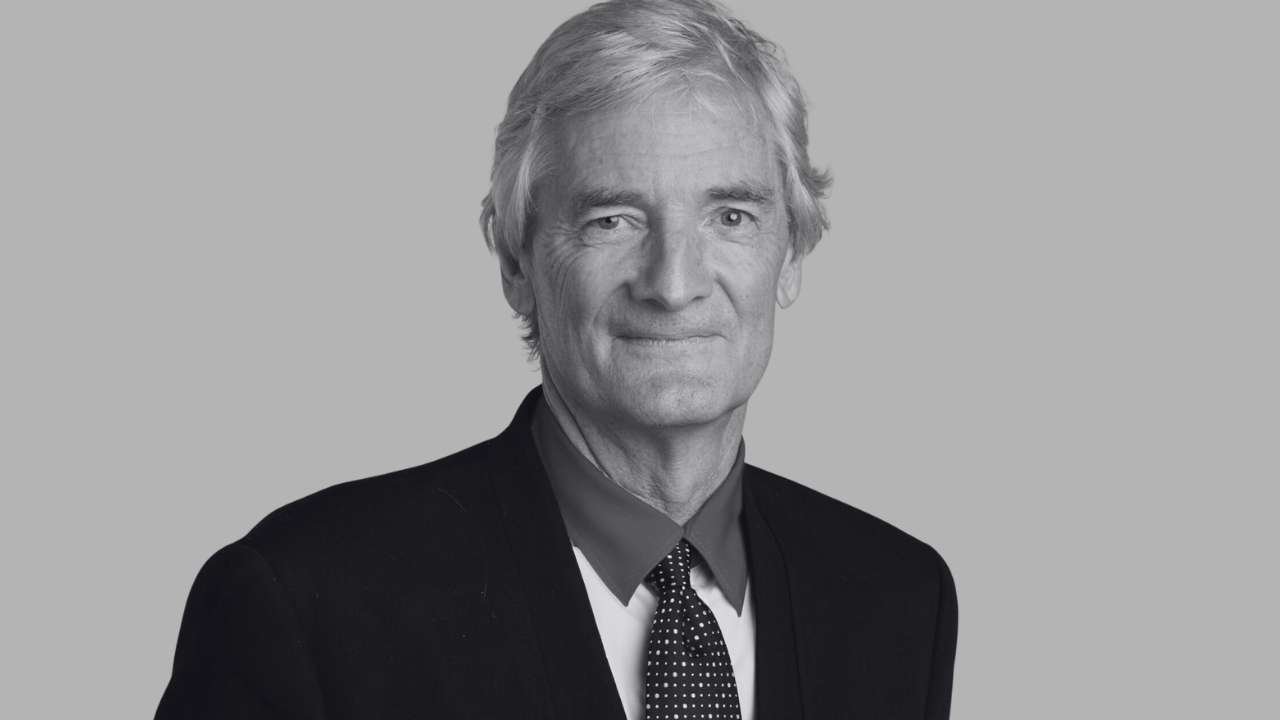

James Dyson: The Relentless Inventor Who Revolutionized Everyday Technology
Sir James Dyson is a British inventor, industrial designer, entrepreneur, and one of the world’s most successful innovators. Best known for inventing the bagless vacuum cleaner using cyclonic separation technology, he founded Dyson Ltd., a global technology company that designs and manufactures high-performance household appliances. As of late 2025, Dyson remains a private company, with Sir James retaining significant control, and his family fortune is estimated at around $16-17 billion (with variations across sources like Forbes at $13.3 billion in March 2025 and Bloomberg at approximately $17 billion by year-end).
Born on May 2, 1947, in Cromer, Norfolk, England, Dyson is now 78 years old. His early life was marked by challenge: his father, a teacher, died of prostate cancer when James was nine, leaving the family in financial difficulty. Despite this, he attended Gresham’s School, where he excelled in long-distance running, crediting the sport with teaching him determination. He later studied at the Byam Shaw School of Art and the Royal College of Art, initially focusing on furniture and interior design before shifting toward engineering and industrial design.
Early on, Dyson’s knack for invention was evident.
At the Royal College of Art, he teamed up with engineer Jeremy Fry to help design the Sea Truck, a flexible fiberglass landing craft. Frustrated with wheelbarrows that bogged down in mud, he invented the Ballbarrow in 1974. This was a plastic wheelbarrow, but instead of a wheel, it had a big ball, making it easier to steer. This led to other ball-based creations, including the Trolleyball, which was used to launch boats, and the Wheelboat, an amphibious vehicle that could hit 40 mph on both land and water.
In 1978, while working on his house, Dyson got fed up with his vacuum cleaner losing suction because of a clogged bag. He remembered the industrial cyclone separator he’d built to catch paint particles and decided to adapt that idea for home use.
After five years and 5,127 prototypes, he finally cracked it: the first bagless vacuum. It used cyclonic separation, a method where dirty air swirls in a cone, flinging dust outward while the clean air escapes.
The big players weren’t interested, worried about losing out on bag sales. So, Dyson went it alone. The G-Force vacuum hit the Japanese market in 1986, a luxury item priced at roughly $2,000. Royalties from that venture helped fund the creation of Dyson Ltd. in 1993, and the DC01 went on to become the UK’s best-selling vacuum cleaner.
Building the Dyson Empire
Dyson Ltd. has since expanded far beyond vacuums. Key innovations include:
- Airblade hand dryer (2006) – dries hands in 10 seconds using high-speed air sheets.
- Air Multiplier bladeless fan (2009) – uses air entrainment for smooth airflow.
- Supersonic hair dryer (2016) – engineered for fast, low-damage drying.
- Airwrap hair styler and other personal care tools.
Today, the company employs thousands of engineers across the globe, pours billions into research and development each year (often between $1-2 billion), and has a presence in over 80 countries. The 2025 Dyson Unveiled event in Berlin was a recent highlight, with Sir James showcasing eleven new products. These included the PencilVac, a remarkably slim vacuum, along with sophisticated robotic cleaners and compact purifiers like the HushJet.
Dyson made the move to Singapore in 2019, aiming to be closer to Asian markets and manufacturing. However, research and development continues to thrive at the UK campus in Malmesbury. The company encountered some difficulties in 2024 and 2025, including profit declines and workforce adjustments. Despite this, Dyson persists in its commitment to innovation, particularly in robotics, artificial intelligence, and sustainability.
Philanthropy and Legacy
Through the James Dyson Foundation, which he established in 2002, Sir James supports engineering education. The foundation’s annual James Dyson Award recognizes young inventors who are tackling global challenges. He also founded the Dyson Institute of Engineering and Technology in 2017, which offers a fully funded engineering degree alongside paid work experience.
Dyson’s interests extend beyond engineering; he’s also a farmer, with substantial holdings in the UK. He channels his investment into sustainable farming through Dyson Farming.
Since 1968, he’s been married to Deirdre Hindmarsh, and they have three children: Emily, Jacob, and Sam. The family values their privacy, residing in the UK, France, and Singapore.
Sir James Dyson’s journey is marked by resilience in the face of adversity. He viewed the thousands of prototypes and failures as integral to his achievements. As he noted in his autobiography, Invention: A Life, genuine innovation stems from tackling real-world challenges without fear. His dedication to engineering excellence continues to motivate people, even in this fast-paced technological landscape.

WeeklyMinds.com is proud to feature an author who brings a wealth of knowledge and experience to our blog. Weekly Minds is an accomplished freelancer writer with 12 years of experience in the field.
WeeklyMinds.com has a passion for sharing insights and perspectives on political, news, technology, home improvement, interiors and many more. Their unique perspective on current affairs has been featured in numerous publications and they have been a guest speaker at college fests.
WeeklyMinds.com is also an avid interest in writing and reading and enjoys singing, music, shopping, travelling and some more. In their free time, they can often be found of reading the novels and various current topics.
We are thrilled to have Elia Scala as a contributor to WeeklyMinds and look forward to their continued insights and contributions to our blog.