

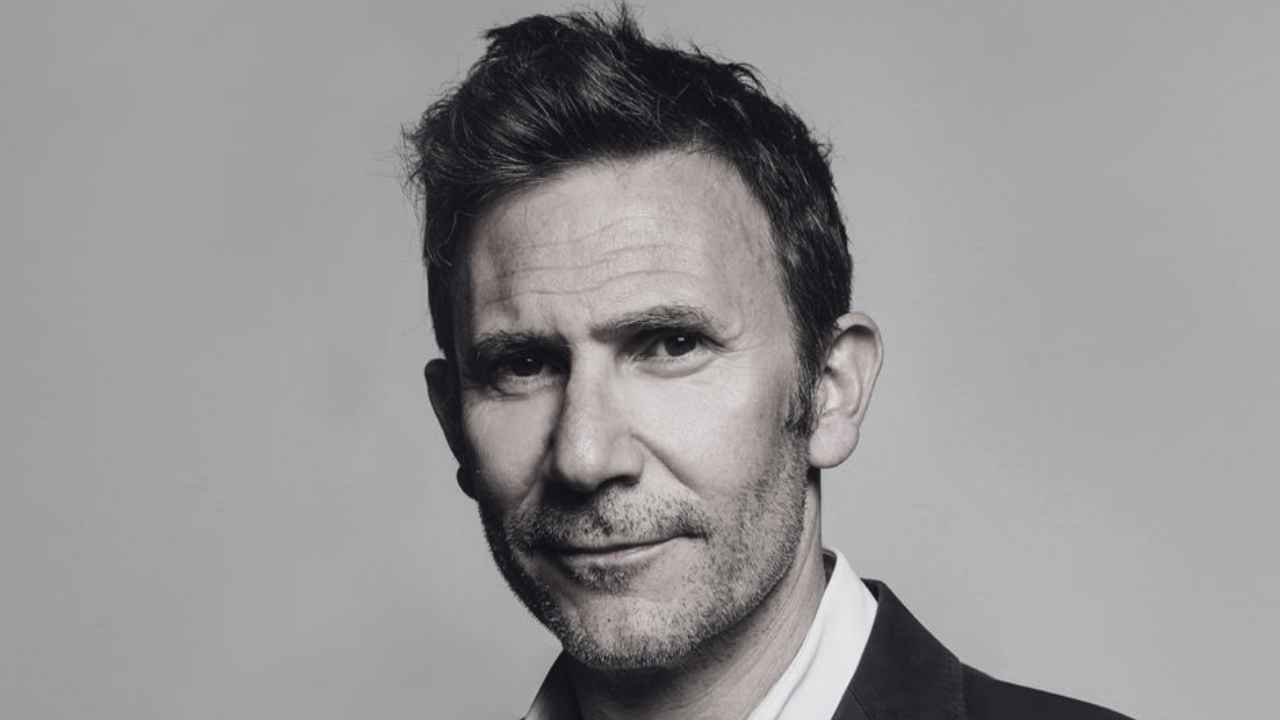

Michel Hazanavicius: A Master of Cinematic Homage and Innovation
Michel Hazanavicius is one of France’s most celebrated contemporary filmmakers, renowned for his playful yet profound engagement with cinema history. Born on March 29, 1967, in Paris to a Jewish family of Lithuanian origin—his grandparents emigrated from Poland and Lithuania in the 1920s—he grew up immersed in a rich cultural heritage that would later influence his work. Hazanavicius’s career spans television, commercials, and feature films, marked by a distinctive style that blends parody, pastiche, and heartfelt storytelling. His breakthrough came with the OSS 117 spy parodies, but it was his 2011 silent film The Artist that catapulted him to international fame, earning him an Academy Award for Best Director.
Hazanavicius’s early life and entry into the industry reflect a classic path for many French directors. After attending art school, he began his career in the late 1980s at Canal+, the influential French pay-TV channel. There, he wrote sketches for comedy troupes like “Les Nuls” and directed commercials, honing his skills in visual humor and timing. His television work included innovative detournement projects, such as La Classe américaine (1993), co-directed with Dominique Mézerette. This TV movie cleverly re-edited footage from Warner Bros. classics, dubbing them into French for comedic effect—a precursor to his later genre-bending experiments.
In 1999, Hazanavicius made his theatrical feature debut with Mes amis (My Friends), a comedy starring his brother, actor Serge Hazanavicius. Though not a commercial blockbuster, it showcased his knack for character-driven humor. His early shorts, like Échec au capital (1997), further demonstrated his irreverent style.
The turning point arrived in 2006 with OSS 117: Cairo, Nest of Spies, a hilarious parody of 1960s Eurospy films, particularly the original OSS 117 series based on Jean Bruce’s novels. Starring Jean Dujardin as the arrogant, politically incorrect secret agent Hubert Bonisseur de La Bath, the film satirized colonial attitudes and Bond-esque tropes while reveling in retro aesthetics. Co-starring Bérénice Bejo (whom Hazanavicius would later marry), it was a box-office hit in France, grossing over $23 million worldwide on a $17.5 million budget.
The success prompted a 2009 sequel, OSS 117: Lost in Rio, which amplified the humor with even bolder gags and visual flair. These films established Hazanavicius as a master of pastiche, affectionately mocking mid-century spy thrillers while delivering sharp social commentary. Dujardin’s charismatic performance became iconic, blending chauvinism with charm in a way that echoed Sean Connery’s Bond but with a French twist.
Building on this momentum, Hazanavicius realized a long-held dream: a silent film. The Artist (2011), shot in black-and-white with minimal dialogue, paid loving tribute to Hollywood’s transition from the silent era to talkies. Dujardin starred as George Valentin, a fading star, opposite Bejo as rising ingénue Peppy Miller. The film’s innovative use of intertitles, expressive acting, and Ludovic Bource’s score captured the essence of 1920s cinema without feeling archaic.
Premiering at the 2011 Cannes Film Festival, where Dujardin won Best Actor, The Artist became a global phenomenon. It received 10 Oscar nominations, winning five: Best Picture, Best Director (Hazanavicius’s first), Best Actor, Best Costume Design, and Best Original Score. Hazanavicius joined the Academy of Motion Picture Arts and Sciences in 2012. Critics praised its charm and technical prowess; it grossed over $133 million worldwide, proving silent cinema could still enchant modern audiences.
Post-The Artist, Hazanavicius explored diverse genres. He contributed to the anthology Les Infidèles (2012) and directed The Search (2014), a dramatic remake of the 1948 film, set during the Second Chechen War, starring Bejo and Annette Bening. Though it was met with mixed reviews, it showed his range beyond comedy.
In 2017, Redoubtable (aka Godard Mon Amour) offered a biographical comedy-drama about Jean-Luc Godard during the 1968 Paris riots, starring Louis Garrel. It divided audiences with its irreverent take on the New Wave icon but highlighted Hazanavicius’s ongoing dialogue with film history.
The 2020s brought further experimentation. The Lost Prince (2020), a family fantasy with Omar Sy, and Final Cut (2022, aka Coupez!), a zombie comedy remake of Japan’s One Cut of the Dead, showcased his comedic roots. His most ambitious recent project is The Most Precious of Cargoes (2024), an animated adaptation of Jean-Claude Grumberg’s Holocaust fable. Narrated by Jean-Louis Trintignant in his final role, it premiered in competition at Cannes 2024. Using hand-drawn animation (including Hazanavicius’s own sketches), it delicately addresses humanity amid horror, earning praise for its poignant, fairytale-like approach despite some mixed reviews.
As of 2025, Hazanavicius remains active, with upcoming projects like I Love Peru (scheduled for July 2025) and Baise-en-ville (2026). In May 2025, he was honored at Cannes with a handprint ceremony on the Chemin des Étoiles, cementing his legacy.
Personally, Hazanavicius is married to Bérénice Bejo, with whom he has two children, Lucien and Gloria. He also has two daughters from a previous relationship with director Virginia Lovisone. His collaborations with Dujardin and Bejo form the backbone of his most beloved works.
Hazanavicius’s filmography reflects a deep love for cinema’s past while pushing boundaries. From spy spoofs to silent tributes and animated Holocaust fables, he balances entertainment with reflection. His Oscar win for The Artist not only revived interest in silent films but also affirmed that bold, nostalgic storytelling can resonate profoundly. In an era of blockbusters, Hazanavicius reminds us of film’s playful, emotional power—a true auteur whose work continues to evolve and inspire.
WeeklyMinds.com is proud to feature an author who brings a wealth of knowledge and experience to our blog. Weekly Minds is an accomplished freelancer writer with 12 years of experience in the field.
WeeklyMinds.com has a passion for sharing insights and perspectives on political, news, technology, home improvement, interiors and many more. Their unique perspective on current affairs has been featured in numerous publications and they have been a guest speaker at college fests.
WeeklyMinds.com is also an avid interest in writing and reading and enjoys singing, music, shopping, travelling and some more. In their free time, they can often be found of reading the novels and various current topics.
We are thrilled to have Elia Scala as a contributor to WeeklyMinds and look forward to their continued insights and contributions to our blog.