

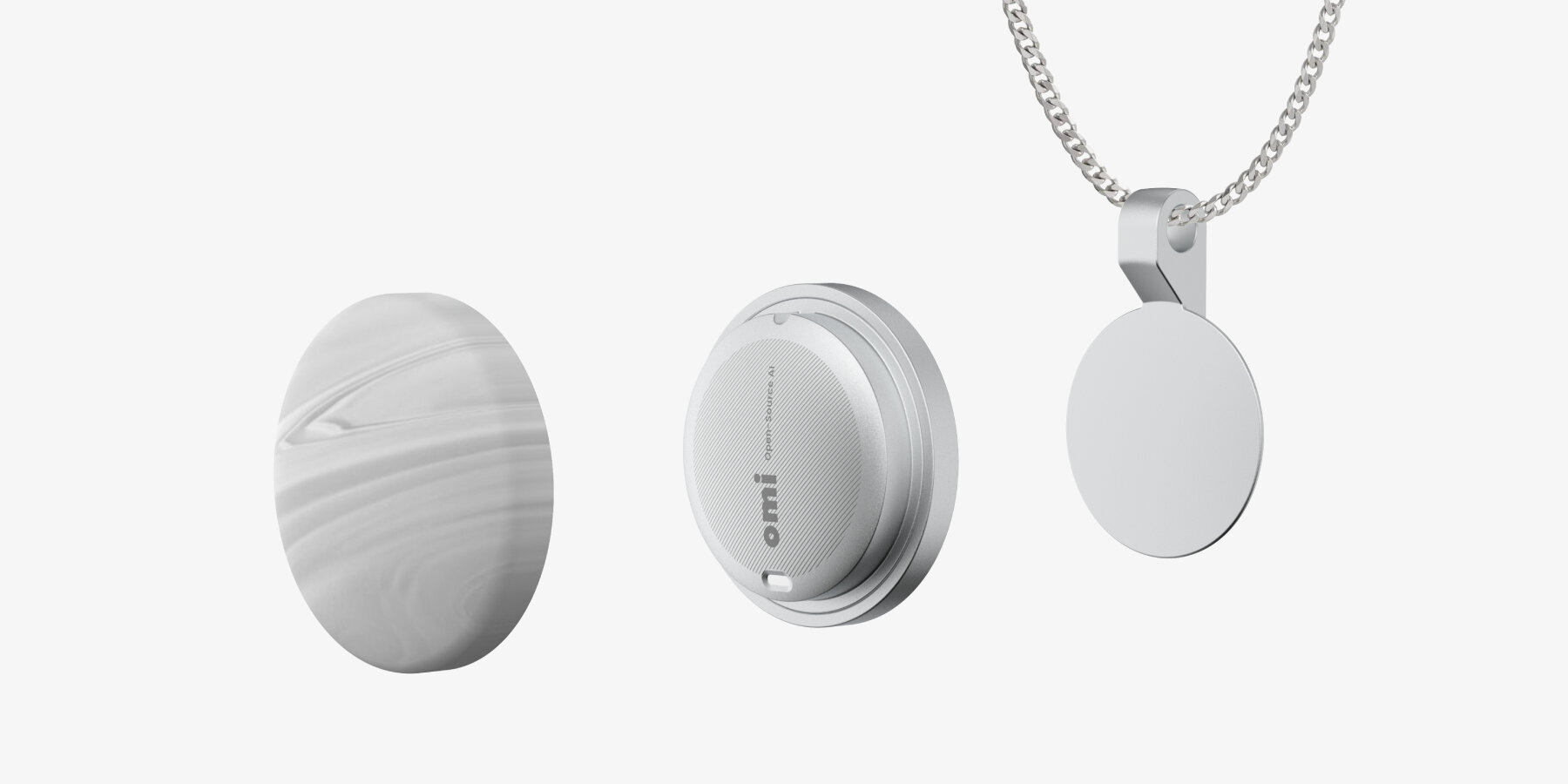
In the rapidly evolving world of AI wearables, the Omi AI device stands out as an innovative, affordable tool designed to act as your “second brain.” Launched by San Francisco-based startup Based Hardware and unveiled at CES 2025, Omi is a compact pendant-style wearable that captures conversations, transcribes them in real-time, generates summaries and action items, and integrates with powerful AI models like those from OpenAI and Meta. Priced at around $89 with no mandatory subscription, it’s positioned as an accessible entry into hands-free AI assistance—far cheaper than competitors like the Humane AI Pin or Rabbit R1.
Design and How It Works
The Omi device resembles a sleek, coin-sized pebble (about the thickness of an Apple AirTag) with a glowing central light indicator. It can be worn primarily as a necklace pendant on a cord, sitting comfortably on your chest for optimal audio capture. Alternatively, for advanced features, it can be attached to your temple using medical tape.
- The core functionality revolves around always-on (or manually activated) listening:
- It connects to a smartphone app, which you can get on both iOS and Android, to stream audio.
- The AI then takes that audio and turns it into transcriptions, summaries, key insights, tasks, and reminders.
You can talk to the AI, saying something like “Hey Omi,” or use the app to get answers that are aware of the context, translations, or web searches.
The battery is supposed to last for several days on a single charge, so you can wear it all day without worrying about it dying.
The Brain Interface: Sci-Fi Meets Reality
What makes Omi different is its experimental brain-computer interface (BCI) module. When you put it on your forehead or temple, it uses EEG (electroencephalogram) sensors to pick up brain waves. Right now, this lets the device know when you’re trying to think or speak to it—so you don’t always need to use a wake word.
Nik Shevchenko, the founder, has showcased this in live demonstrations, where a concentrated thought prompts a reaction.
Upcoming updates, slated for 2026-2027, are expected to offer more profound integration, possibly even reading thoughts directly. Though this is a lofty goal, the initial iterations prioritize practical gains in productivity, not complete telepathy.
Key Features and Ecosystem
- Open-Source Platform: The platform is entirely open-source on GitHub, giving developers the freedom to modify it or create their own applications.
- App Marketplace: There are over 250 apps available for integrations, such as Google Calendar and Notion, along with custom tools.
- Privacy Focus: The system emphasizes privacy with local storage options, encryption, one-click data deletion, and offline processing capabilities.
Multilingual capabilities are built-in, supporting over twenty-five languages through translation.
Early access began in the second quarter of 2025. By early 2026, the product was readily available, and users reported positive impacts on their productivity.
Reviews praise its usefulness in meetings, for personal notes, and as a potential aid for those with ADHD. However, some users have pointed out issues like battery life fluctuations and the ongoing ethical discussions surrounding its always-on listening feature.
Is this the future of wearable AI?
Omi signifies a move toward ambient, proactive AI companions. In a landscape littered with failed ventures (think Humane, Rabbit), its open design, affordability, and ambitious brain-computer interface plans set it apart. Whether it becomes indispensable or raises privacy alarms, Omi is redefining how AI enhances human memory and interaction.