

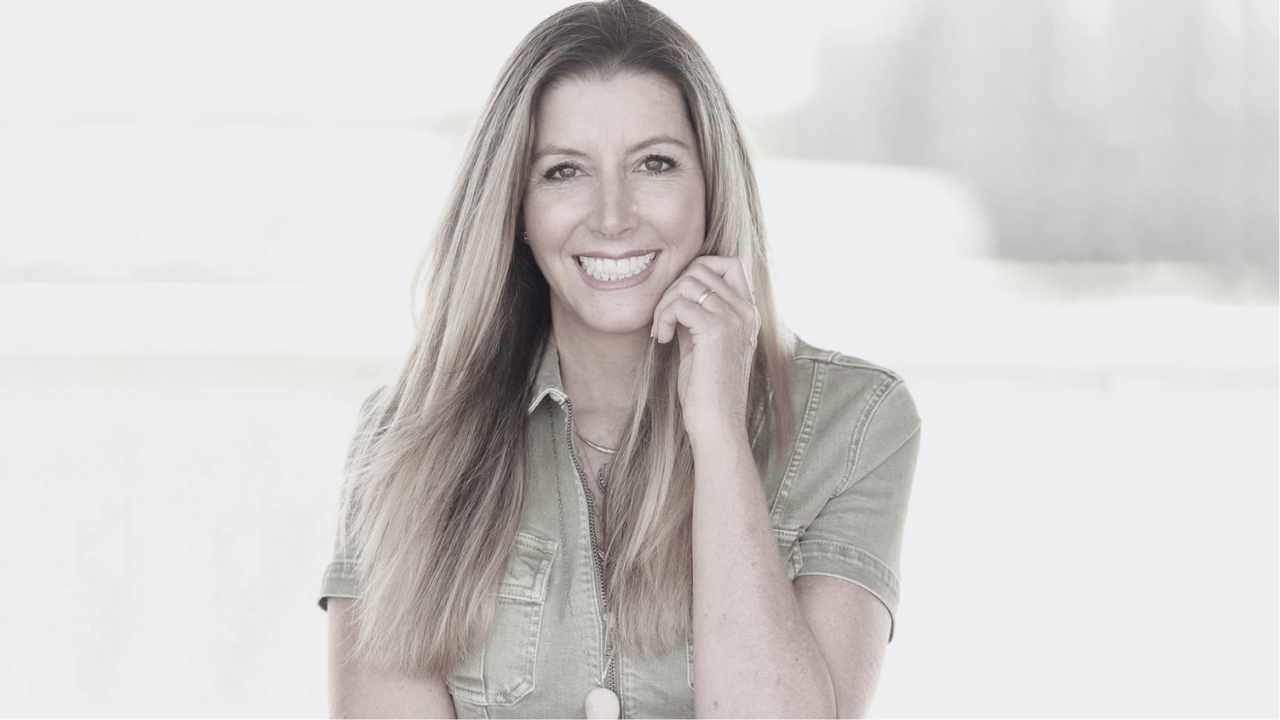

From $5,000 to a Global Empire: The Inspiring Journey of Sara Blakely
In a world where success stories often include Ivy League degrees, big venture capital deals, and well-polished pitches to Silicon Valley elites, Sara Blakely’s story stands out like a pair of perfectly sculpted white pants. Blakely was born on February 27, 1971, in Clearwater, Florida. She turned $5,000 in personal savings—money she made selling fax machines door-to-door—into a $1.2 billion shapewear empire. At 54, she is not only the executive chairwoman of Spanx and the founder of the innovative shoe brand Sneex, but she is also a self-made billionaire, a philanthropist, and a role model for women who want to bet on themselves. Her net worth is about $1.1 billion as of 2025. This shows that she has grit, intuition, and doesn’t take “no” for an answer.
Starting from Nothing and Getting an Idea
Sara Treleaven Blakely grew up in a creative family. Her mother, Ellen Ford, was an artist, and her father, John Blakely, was a trial lawyer. Sara was no stranger to imagination because she had a brother named Ford who was also an artist. She was very good at debate at Clearwater High School. After that, she went to Florida State University, where she got a degree in communications and joined the Delta Delta Delta sorority.
What were her dreams after college? Just like Dad, I’m going to law school. But two bad LSAT scores put an end to those dreams. Blakely didn’t give up and got a three-month job at Walt Disney World in Orlando, where she wore the ears of a character performer. She famously failed an audition to play Goofy. She tried her hand at stand-up comedy to improve her quick wit before switching to sales at Danka, an office supply company. In the sweltering heat of Florida, she spent seven years knocking on doors and selling fax machines. By the time she was 25, she was a national sales trainer who had mastered the art of persuasion, a skill that would soon change the way people did business.
At 27, in 1998, the “aha” moment happened. Blakely squeezed into white pants to get ready for a party, but she hated how her control-top pantyhose showed through her open-toed shoes. She got so mad that she grabbed scissors and cut off the feet. What happened? A smoother shape that didn’t roll up her legs. She later said, “It worked.” “But it wasn’t nice.” That do-it-yourself hack became the model for Spanx, which makes footless, figure-flattering tights for real women.
No money, just hard work to get Spanx off the ground
Blakely kept her idea a secret for a year on purpose to protect it from people who might question why no one had done it before, even her own family. After Danka’s shifts, she spent her $5,000 savings (about $9,600 today) on research. She looked through fabrics, wrote her own patent application, and paid $150 to trademark “Spanx” on the USPTO website. (She played around with “Spanks” at first, but then chose the more fun and cheeky spelling.)
She was always rejected. She drove to North Carolina’s hosiery mills and pitched her prototype to manufacturers who were skeptical and turned her down because she didn’t have corporate backing. After two years of “no,” a mill owner finally agreed to make her first run because his daughters were so excited about it. Blakely stormed department stores with samples in hand. In a famous demonstration at Neiman Marcus, she went into a bathroom to try on Spanx and then came out to show the buyer how seamless it was. Seven stores placed orders right away, and soon after, Saks, Bloomingdale’s, and Bergdorf Goodman did too.
What is marketing? Blakely’s pure genius. She paid friends to “find” Spanx in stores and ask for it by name, which got people talking. Then came the Oprah bet: a basket of products and a handwritten note about her pantyhose problems. Winfrey called Spanx a “Favorite Thing” in November 2000. Sales went from $4 million in the first year to $10 million in the second year. Blakely left Danka, joined QVC, and put Spanx next to shoes instead of hosiery to attract shoppers who are ahead of the curve in fashion. No ads, no outside investors—just nonstop, “unhinged” work. She even appeared on Richard Branson’s 2004 reality show Rebel Billionaire, where she came in second but got a $750,000 check to start her foundation. Forbes named her the youngest self-made female billionaire in the world in 2012, when Spanx was worth $1 billion.
Building an Empire and More
Spanx started out as footless hose and grew into a global powerhouse with leggings, jeans, swimwear, and even men’s lines. Blackstone bought a majority stake for $1.2 billion in 2021. Blakely stayed on as executive chairwoman and gave each of her 750 employees $10,000 in cash and two first-class plane tickets anywhere. By 2024, the company made $159.2 million a year. In 2025, it released products like SPANXsculp ReDefine jeans and soft loungewear that cost between $58 and $158.
But Blakely’s goals went beyond just making shapes. She and her husband Jesse Itzler (co-founder of Marquis Jet) bought the Atlanta Hawks for $850 million in 2015, making them minority owners. The couple, who have been married since 2008 and have four kids, converted to Judaism and now live in Atlanta. (Blakely is afraid of flying?) She pushes through for work and those Hawks games.
Her most recent project, Sneex, which came out in August 2024, focuses on another problem: heels that hurt. These high-heeled sneakers cost between $395 and $595 and have wider toe boxes and supportive soles that combine style with “no blisters” comfort. Blakely said at the 2025 Forbes Power Women’s Summit, “I waited ten years for someone to fix heels.” “When no one else did, I did.” She told people who wanted to start their own businesses to “bet on the founder within.”
Giving Back: Helping the Next Generation
Blakely is as generous as she is successful. She started the Sara Blakely Foundation in 2006 to help women with their education, business, and the arts. Branson gave her money to start it. She gave $1 million to Oprah’s Leadership Academy for Girls, promised $5 million to businesses run by women during COVID-19, and in 2013 became the first woman to join the Giving Pledge, promising to give half of her wealth to charity.
In March 2025, the National Women’s History Museum will honor her at its Women Making History Awards Gala, along with people like Dr. Opal Lee. They will recognize her as a pioneer in both invention and charity. In June 2025, she told Fortune that her “unhinged” tactics, which included pitching Oprah and bribing friends, were necessary: “You gotta do what you gotta do.”
What a Shapewear Revolutionary Taught Me
What does Sara Blakely say? Accept failure as feedback, listen to your gut (and the “signs” from the universe), and start small but think big. In a September 2025 interview with Fortune, she said, “Ideas are most vulnerable when you first get them.” I put my money on myself and won. As Spanx turns 25 and Sneex makes heels less annoying, Blakely shows that the best new ideas solve everyday problems with a little sass. For women all over the world, she’s more than a founder; she’s a reminder that your next big break might be hiding in a pair of pants that don’t fit right.