

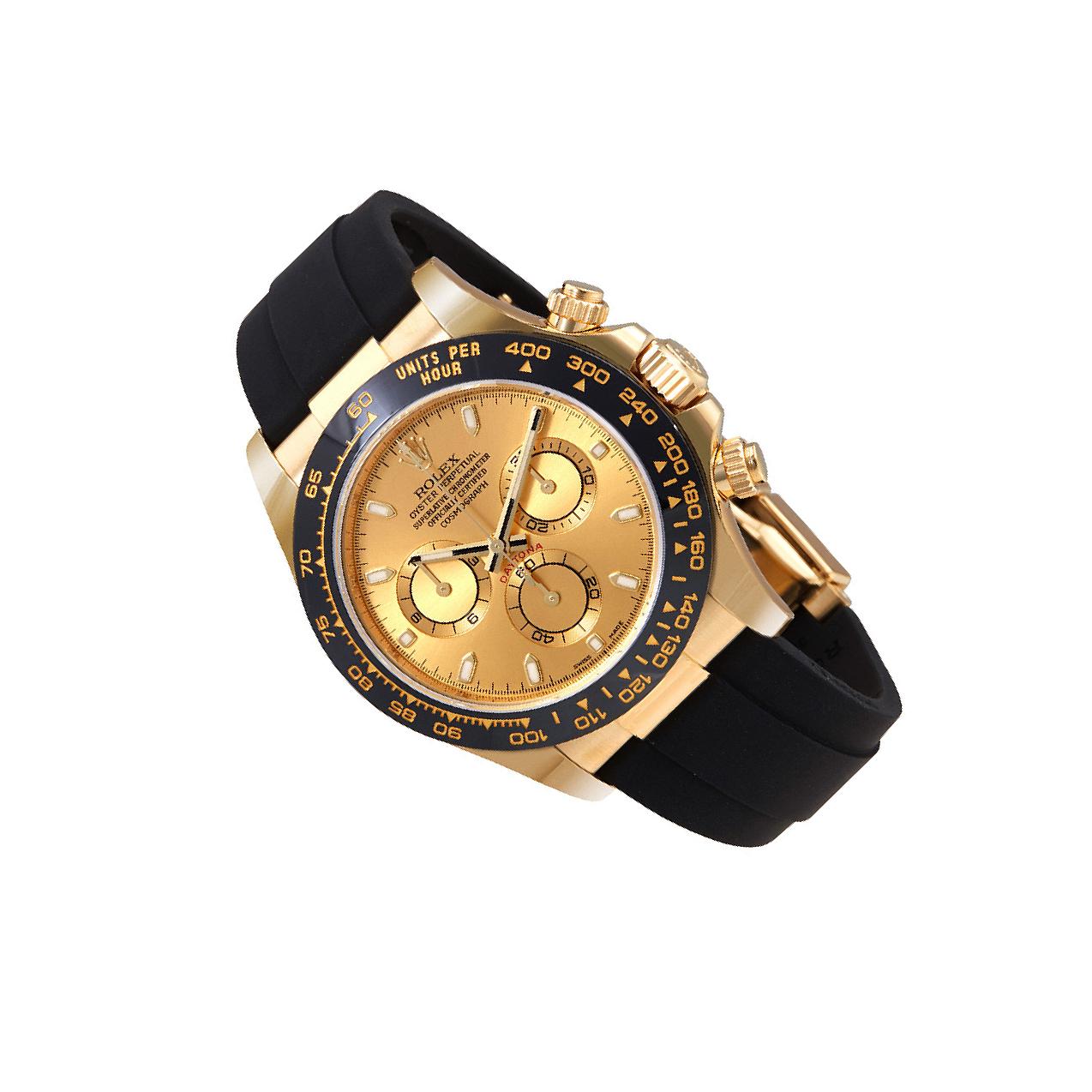
The Rolex Daytona 116518LN is one of the most coveted chronographs in the world—a yellow-gold sports watch that seamlessly blends racing heritage with refined luxury. Discontinued in 2016, this model has become increasingly sought after by collectors, commanding premium prices in the secondary market. With its striking black dial against warm yellow gold, the 116518LN embodies Rolex’s mastery of watchmaking and enduring design philosophy.
Historical Context
The Daytona chronograph lineage traces back to 1963, named after the legendary Daytona International Speedway in Florida. For decades, it remained Rolex’s answer to racing professionals and enthusiasts alike. The 116518LN, introduced in 2000, represented the height of the Zenith movement-era Daytonas—a period many collectors regard as the golden age of the line. Its combination of precious metal construction and chronographic functionality made it a statement piece for those who could afford its considerable price tag.
Design and Aesthetics
The black dial of the 116518LN creates a sophisticated contrast with the warm luster of 18-karat yellow gold. This monochromatic approach showcases a classic chronograph design: three subdials at the 3, 6, and 9 o’clock positions display running seconds, elapsed minutes, and elapsed hours, respectively. The dial’s matte finish reduces glare while maintaining legibility, essential for a watch designed with motorsport precision.
The 40-millimeter case, forged from yellow gold, presents a substantial yet proportionate presence on the wrist. Rolex’s brushed finish on the case surfaces, combined with polished lugs and bezel, creates visual depth and character. The tachymeter bezel, graduated to 400 units per hour, references the watch’s sporting heritage and provides practical functionality for calculating average speed.
Technical Specifications
At its heart beats the Zenith El Primero-based movement, caliber 4030—a self-winding chronograph capable of measuring elapsed time to 1/10th of a second. This movement represents the pinnacle of chronograph engineering at the time, with its 36,000 vibrations per hour ensuring precise timekeeping. The 116518LN featured 31 jewels and a power reserve of approximately 50 hours, reliability that collectors have come to expect from Rolex.
The watch measures 40mm in diameter and 12.5mm thick, establishing its commanding presence without overwhelming the wrist. Water-resistant to 100 meters, it proved capable of everyday wear despite its precious-metal construction. The sapphire crystal, scratch-resistant and anti-reflective coated, protects the dial while maintaining clarity.
The Yellow Gold Question
Yellow gold lends warmth and gravitas to the Daytona 116518LN, distinguishing it from its steel counterparts. For collectors seeking a dress-worthy chronograph that transcends typical sports-watch territory, the yellow-gold version offered distinctive appeal. However, this precious metal construction also contributed to the watch’s high cost, limiting its accessibility compared to steel models. Today, yellow gold Daytonas from this era represent increasingly rare finds in the market.
Collectibility and Market Position
The discontinuation of the 116518LN coincided with Rolex’s transition to in-house movement chronographs, creating instant collectibility. Prices have appreciated substantially since production ceased, with well-maintained examples commanding five to six-figure sums depending on condition and provenance. The yellow gold variant particularly appeals to collectors seeking vintage Daytona characteristics without the astronomical premiums of earlier references.
The watch’s relative scarcity, combined with Rolex’s legendary durability and the enduring appeal of chronographs, ensures its place in horological history. Investment potential has become a secondary consideration for many owners—the primary draw remains the horological achievement and aesthetic presence this timepiece delivers.
Conclusion
The Rolex Daytona 116518LN stands as a complete expression of watchmaking excellence: precise engineering, refined aesthetics, and precious metal craftsmanship combined into a single instrument. Whether appreciated for its technical prowess, investment potential, or simply the pleasure of wearing a timepiece that commands respect in any setting, the 116518LN represents a defining achievement in Rolex’s remarkable chronograph legacy. For those fortunate enough to own one, it remains far more than a watch—it is a portable work of horological art.