

By 2025, Wi-Fi technology is entering a new phase. The rollout of Wi-Fi 7 (IEEE 802.11be, also called “Extremely High Throughput”) is pushing wireless performance, latency, and multitasking to new limits. Key features such as Multi-Link Operation (MLO), wider channel bandwidths, and improved modulation are enabling much higher throughput and more robust connections. Devices and routers supporting Wi-Fi 7 are becoming more common, though many homes will still have a mix of Wi-Fi 6, 6E, and older devices.
In this transitional era, a top router in 2025 must balance raw speed, coverage, compatibility, and smart features. A router that delivers blazing 6 GHz performance but fails to manage legacy clients or lacks good firmware might underdeliver in real-world use.
When evaluating routers, consider:
- Multi-GHz band support (2.4, 5, and 6 GHz)
- Multi-gig wired ports (2.5G, 5G, 10G)
- Strong CPU / memory to handle many devices
- Good antenna / beamforming design for range
- Mesh or extenders for large homes
- Software features: security, QoS, updates
With that in mind, here are three routers (or mesh systems) that stand out in 2025.
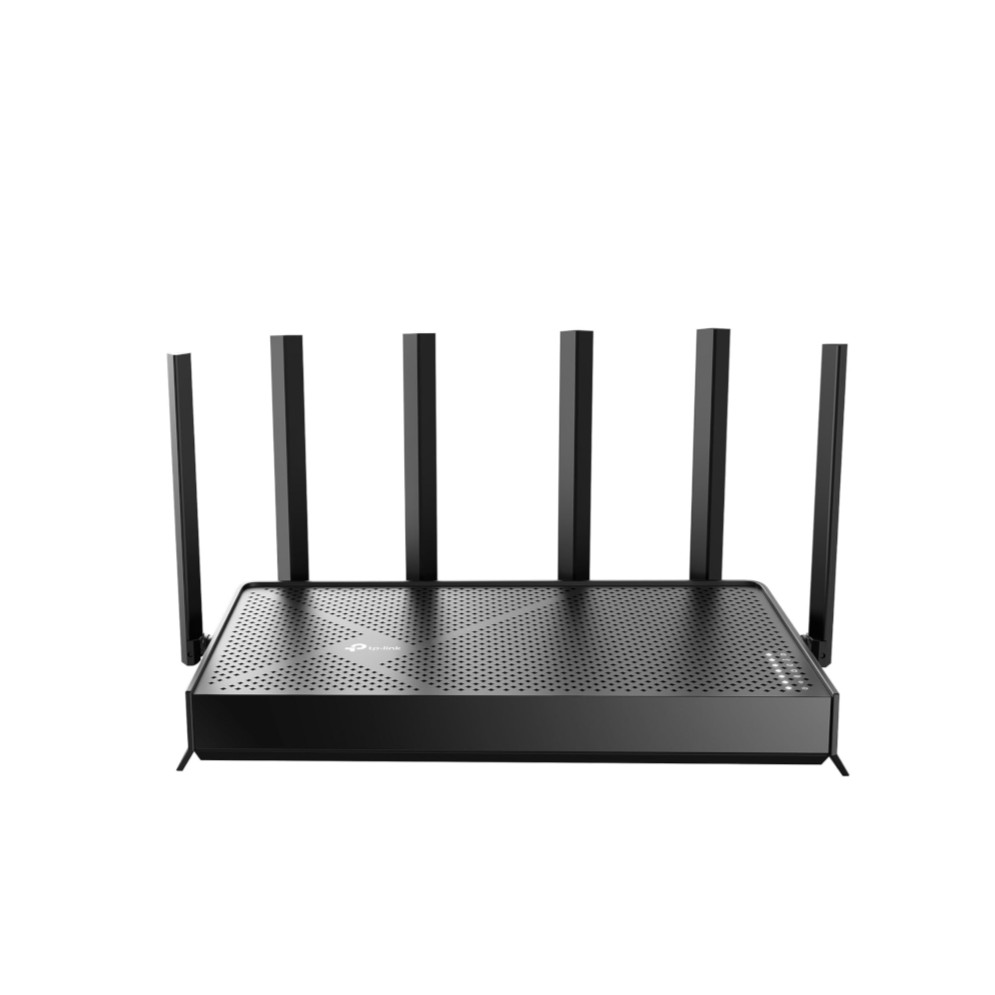
1. TP-Link Archer BE550 — Best Overall Standalone Router
One of the leading picks in independent router reviews is the TP-Link Archer BE550. RTINGS calls it “the best router we’ve tested” thanks to its performance balance.
Why It Stands Out
- Tri-band support including the 6 GHz band, which is essential for Wi-Fi 7 clients
- All five Ethernet ports rated for 2.5 Gbps, allowing high-speed wired devices to keep up
- Excellent performance in dense network usage, supporting multiple devices streaming, gaming, downloading
- Compatibility with TP-Link’s EasyMesh, allowing it to expand into a broader coverage solution
Considerations
- On very large homes, range on the 5 GHz band can drop off, so for multi-story houses you may still need a mesh system or extender
- As with most early Wi-Fi 7 routers, performance gains depend heavily on client device support
Given its strong balance of features, it’s a great choice for many homes that want top-tier performance without overpaying for massive mesh ecosystems.
2. Asus RT-BE96U — Best for Speed & Power Users
If you demand the absolute bleeding edge in speed and features, the Asus RT-BE96U is one of the premium Wi-Fi 7 routers cited by Tom’s Guide as “the first Wi-Fi 7-powered device from Asus that blew them away.”
What It Brings to the Table
- Very high peak throughput and strong coverage in testing
- Rich software stack from Asus: AIProtection (security), advanced controls (VPN, QoS, network segmentation)
- Ideal for setups with lots of demanding devices, gamers, media servers, or power users
Trade-offs
- Very high price compared to more mainstream routers
- Overkill for many average households, especially ones without many Wi-Fi 7 devices yet
- May require more careful placement to maximize coverage
If your home network is highly demanding, or you expect to fully adopt Wi-Fi 7 devices soon, this router gives you headroom for years to come.
3. TP-Link Deco BE63 Mesh System — Best for Large Homes & Mesh Coverage
For houses with multiple floors, thick walls, or large footprints, a mesh system is often a more practical solution than a single router. RTINGS names TP-Link Deco BE63 as its top “mesh Wi-Fi system” pick.
Why Choose a Mesh System Like the BE63
- It’s tri-band and supports Wi-Fi 7, so satellite nodes maintain high performance while relaying traffic
- Provides strong coverage and a seamless network experience as you move around the home
- Easier to scale: you can add more nodes as needed
- Better suited to real-world environments than pushing a single router to extremes
In Tom’s Guide’s Wi-Fi 7 roundup, they also note that mesh systems are becoming more central to high-end home networking, with routers and mesh systems being assessed side by side.
What to Watch Out For
- Price of multi-node kits is naturally higher
- You’ll lose some bandwidth in hops if backhaul isn’t strong (wired backhaul or strong 6 GHz link helps)
- Setup and firmware consistency across nodes matters — choose a mesh brand with reliable updates
Bonus Mentions & Regional Picks
While those three are standout choices globally, there are a few other routers and mesh systems worth attention:
- Asus RT-BE58U: Wired names this its “top pick for most folks” in 2025, as a more affordable Wi-Fi 7 router.
- MSI RadiX AXE6600: A strong Wi-Fi 6E contender when full Wi-Fi 7 devices are not yet abundant.
- In China, Huawei X1 Pro is a locally notable Wi-Fi 7 router launched in 2025, with sleek design and solid specifications.
Also, it’s important to note that network standards continue evolving: Wi-Fi 8 is under development, and early prototypes are already showcasing improved reliability and latency over real-world connections. While it’s not yet in consumer devices, buyers should keep an eye on future-proofing for the next few years.
Choosing the Right Router for Your Situation
Given these options, how do you pick the best for your home?
- Size and layout of home: Single apartment or small house? A powerful standalone router like the BE550 or BE96U may work best. Large house with many rooms/floors? Go with a mesh system.
- Device mix and future upgrades: If many of your devices already support Wi-Fi 7, you’ll benefit more. If many are older, ensure backward compatibility and balanced performance.
- Wired needs: If you have NAS, gaming PCs, or switches, make sure your router has multi-gig Ethernet ports.
- Software and security: Frequent firmware updates and robust security features (WPA3, intrusion detection) matter a lot.
- Budget vs lifespan: The more you spend now on better hardware, the longer it may stay viable.
Conclusion
In 2025, the frontier of home networking is defined by Wi-Fi 7, mesh coverage, and smarter, more capable routing hardware. Among many excellent options, three routers stand out:
- TP-Link Archer BE550 — balanced, versatile, and top performer in many tests
- Asus RT-BE96U — for those who want cutting-edge performance and features
- TP-Link Deco BE63 — for wide coverage and seamless mesh networking
These choices reflect a key trend: high speeds are only part of the story—how your router manages multiple devices, coverage, interoperability, and future growth matters just as much.

WeeklyMinds.com is proud to feature an author who brings a wealth of knowledge and experience to our blog. Weekly Minds is an accomplished freelancer writer with 12 years of experience in the field.
WeeklyMinds.com has a passion for sharing insights and perspectives on political, news, technology, home improvement, interiors and many more. Their unique perspective on current affairs has been featured in numerous publications and they have been a guest speaker at college fests.
WeeklyMinds.com is also an avid interest in writing and reading and enjoys singing, music, shopping, travelling and some more. In their free time, they can often be found of reading the novels and various current topics.
We are thrilled to have Elia Scala as a contributor to WeeklyMinds and look forward to their continued insights and contributions to our blog.