


ON THE ROAD LESS TRAVELED: An Unlikely Journey from the Orphanage to the Boardroom And THE ISLAND OF THE FOUR Ps A Modern Fable About Preparing for Your Future
Visit: Edhajim.com
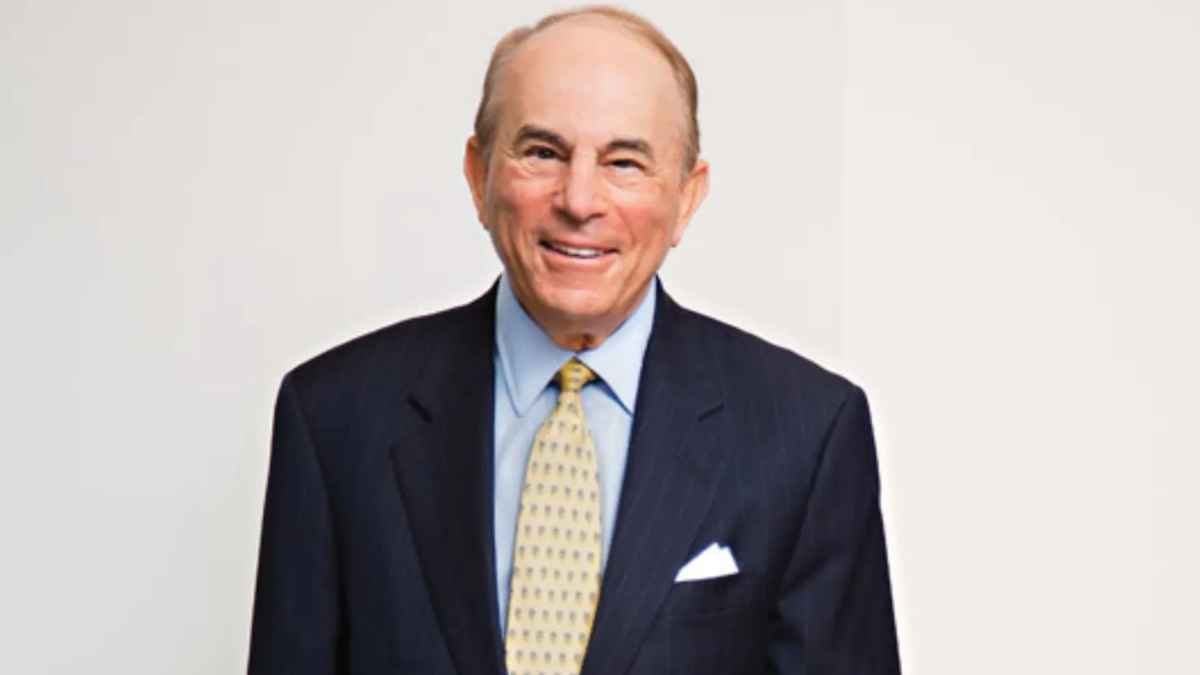
Few life stories illustrate the power of perseverance quite like that of Ed Hajim. Long before he became a highly respected financier, philanthropist, and author, Hajim faced challenges that would have derailed many people. Abandoned by his father at a young age, he spent much of his childhood moving between orphanages, foster homes, and the care of relatives, often unsure of what the future would hold. Yet through determination, hard work, and an unwavering belief in the possibility of a better life, he transformed those early hardships into the foundation for an extraordinary career.
After earning his MBA from Harvard Business School, Hajim went on to build a distinguished career on Wall Street, becoming a successful investment manager and business leader. Along the way, he developed a reputation not only for financial acumen but also for integrity, resilience, and a commitment to helping others achieve their potential. In recent years, he has dedicated much of his time to philanthropy, education, and mentoring, sharing the lessons he learned throughout his remarkable journey.
His memoir, On the Road Less Traveled: An Unlikely Journey from the Orphanage to the Boardroom, offers a candid and inspiring account of the obstacles he overcame and the values that guided him to success. More than a story about business achievement, the book is a testament to the importance of personal responsibility, adaptability, lifelong learning, and the relationships that help shape our lives. Through vivid storytelling and hard-earned wisdom, Hajim demonstrates that our beginnings do not have to define our futures.
In this conversation, we speak with Ed Hajim about his unconventional path from an unstable childhood to the boardroom, the experiences that shaped his worldview, the lessons he hopes readers take away from his memoir, and why giving back has become such an important part of his life’s work. His story serves as a powerful reminder that resilience, character, and determination can open doors that once seemed impossible to reach.
- Your early life was marked by significant instability—how do you think that shaped the way you define “security” today, both personally and professionally?
Given my father’s misfortunes and having had a childhood with much adversity: early on, one of my main goals was financial security. I never wanted to be and feel poor again. Professionally, I always recognized that well throughout risk-taking was very important for success. I have always focused on what could go wrong as well as what most believe will go right. Even though I am an optimist, this attitude sometimes makes me appear critical and skeptical.
You’ve spoken about mentorship as a turning point in your life. What qualities made those mentors effective for you, and how do you try to embody that for others now?
The most important quality of my early mentors was that they were truly interested in me and my success. They saw me as an individual and recognized and encouraged my talents. I try to be focused on my mentees, letting them understand that their success is very important to me. Besides offering general guidance, showing great interest and being available, it helps if you have been where they think they want to go.
- In your experience moving through both hardship and high finance, what’s a misconception people often have about success at the highest levels?
The biggest misconception about success at the highest levels is NOT an over emphasis on technical skills, although important, but rather the need for “people skills.” The leadership ability to motivate and celebrate people requires very different skills than being a great scientist, salesperson or manager.
- How has your understanding of identity evolved over time—especially as it relates to family history, adoption, and self-determination?
The evolution of identity over time requires more than a few sentences. As you experience your life, your identity evolves. Understanding my past, gave me a greater understanding of my family history and how that impacted my decisions. That said, it also better prepared me to adapt to new and more complex conditions. Having had lived in orphanages and foster homes, really forced me to define myself as a person, a parent , a spouse, a businessman and later in my philanthropy. Self-determination became a lifelong process and part of my identity.
- When you look back at key decisions in your career, which ones felt most intuitive in the moment but proved most transformative in hindsight?
Upon my college graduation at the University of Rochester, because I had a NROTC -scholarship, I had to spend at least three years on active duty as a naval officer.
Once I had finished my naval service and spent time as an engineer, business school was the obvious next step. It was the most transformative decision in hindsight. Attending Harvard Business School, I found my passion; I developed many personal and professional principles and gained many lifelong friends and relationships.
- What role does forgiveness—of others or yourself—play in the way you’ve been able to move forward in life?
Forgiveness is one of the keys to moving forward in almost everything we do. First, I had to forgive my parents for essentially abandoning me. Also, I had forgiven some of my bosses for not treating me and my co-workers the way we should have been treated.
I use a mantra “Never be a victim.” Playing a victim uses too much energy, just forgive and channel that energy instead on “What’s next!”
- You’ve navigated both institutional power structures and personal rebuilding. Where do you think real resilience actually comes from: mindset, environment, or something else?
Most people’s and my resilience come from overcoming and/or surviving significant difficulties. You develop a mindset after you have mastered the “I will get through this” mentality. I know my resilience comes from childhood circumstances. I had little choice but to be and deliver resilience.
A favorite quote is from former President, Franklin D. Roosevelt, who shared:
“A smooth sea never made a skilled sailor.”
- If you were speaking directly to someone who feels like their background limits their future, what would you say to them today that you wish someone had told you earlier
I am very lucky since I am living proof that your beginning does not determine where you end-up. The messages I would give and one I wish I had received early on in my journey: Anything is Possible, Education is the solution to (almost) everything and my earlier mantra: never be a victim. Also, I would recommend reading the biographies of successful people and learn from their experiences.
ED HAJIM is the author of the critically acclaimed memoir, On The Road Less Traveled and Island of the Four Ps. The son of a Syrian immigrant, he is a seasoned Wall Street executive with more than 50 years of investment experience. He has held senior management positions with the Capital Group, E.F. Hutton, and Lehman Brothers before becoming chairman and CEO of Furman Selz. Hajim has been the co-chairman of ING Barings, Americas Region; chairman and CEO of ING Altus Group and ING Furman Selz Asset Management; and chairman and CEO of MLH Capital.
He was also with High Vista, a Boston-based money management company. In 2008, after 20 years as a trustee of the University of Rochester, Hajim began an eight-year tenure as chairman of the university’s board. Upon assuming that office he gave the school $30 million—the largest single donation in its history—to support scholarships and endow the Edmund A. Hajim School of Engineering and Applied Sciences. Through the Hajim Family Foundation, he has made generous donations to organizations that promote education, health care, arts, culture, and conservation. In 2015, he received the Horatio Alger Award, given to Americans who exemplify the values of initiative, leadership, and commitment to excellence and who have succeeded despite personal adversities. Married for 60 years, Ed and his wife Barbara have three children and eight grandchildren.

WeeklyMinds.com is proud to feature an author who brings a wealth of knowledge and experience to our blog. Weekly Minds is an accomplished freelancer writer with 12 years of experience in the field.
WeeklyMinds.com has a passion for sharing insights and perspectives on political, news, technology, home improvement, interiors and many more. Their unique perspective on current affairs has been featured in numerous publications and they have been a guest speaker at college fests.
WeeklyMinds.com is also an avid interest in writing and reading and enjoys singing, music, shopping, travelling and some more. In their free time, they can often be found of reading the novels and various current topics.
We are thrilled to have Elia Scala as a contributor to WeeklyMinds and look forward to their continued insights and contributions to our blog.