

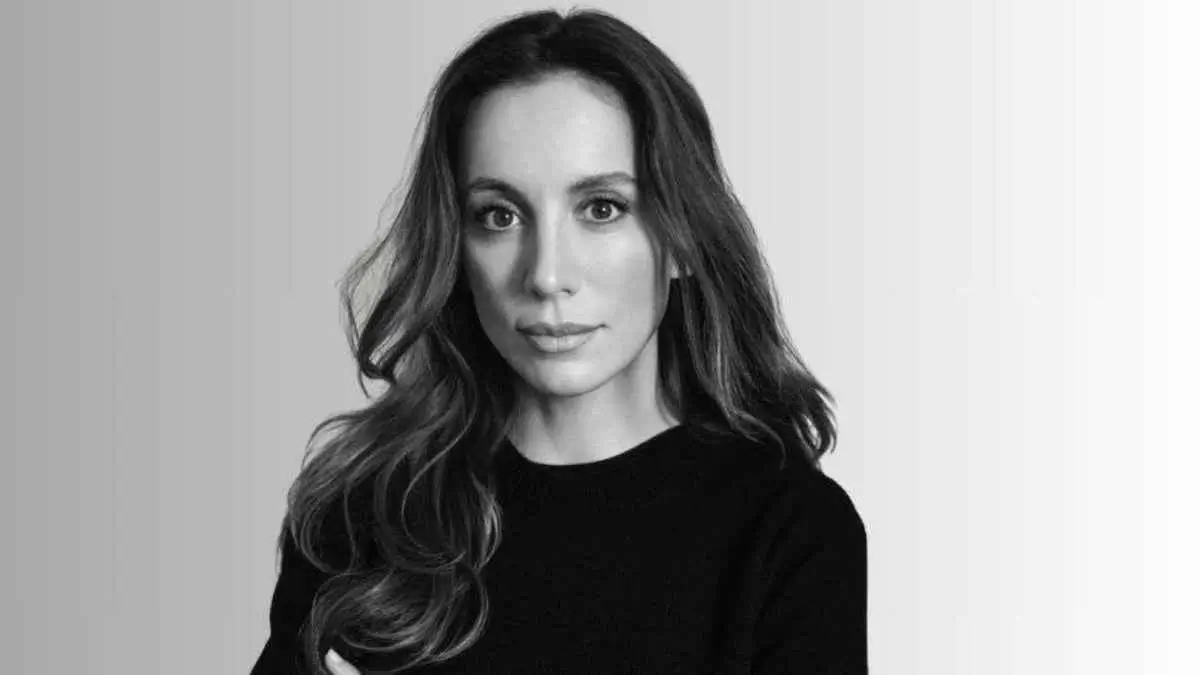

There’s a kind of power in a quiet. For about a year and a half, Mira Murati, one of the figures who worked to build ChatGPT and briefly ran OpenAI itself, went largely underground. But she was building. The quiet was always strategic, because the moment she emerged from the dark in summer 2026, and announced what she and the fledgling company behind her had achieved in isolation, it wasn’t news so much as relief. In her two years away, as founder and chief executive of Thinking Machines Lab, Murati set about showing that the industry’s biggest developments unfold away from the din and chatter, and the influence born of technical gravitas outweighs its loudest news cycles.
Mira Murati Profile Summary
| Attribute | Details |
|---|---|
| Full Name | Ermira “Mira” Murati |
| Date of Birth | 16 December 1988 (Age 37) |
| Place of Birth | Vlorë, Albania |
| Nationality | Albanian-American |
| Education | BA – Colby College (2011); BEng – Dartmouth College (2012) |
| Early Schooling | Pearson College UWC, Canada (IB Diploma, 2007) |
| Career Start | Intern at Goldman Sachs, Tokyo (2011); Zodiac Aerospace (2012–2013) |
| Tesla | Senior Product Manager, Model X (2013–2016) |
| Leap Motion | VP of Product & Engineering (2016–2018) |
| OpenAI | VP of Applied AI (2018–2022); CTO (2022–2024); Interim CEO (Nov 2023) |
| Thinking Machines Lab | Founder & CEO (2025–present) |
| Major Contributions | Led development of ChatGPT, DALL·E, Codex, Sora |
| Recognition | Ranked #57 in Fortune’s “100 Most Powerful Women in Business” (2023); Honorary Doctor of Science from Dartmouth (2024) |
| Languages | Fluent in Italian |
| Current Focus | Building accessible, customizable, human-aligned AI systems |
A Childhood of Scarcity and Curiosity
Mira Murati, born Ermira Murati on December 16 1988 is originally from a port and seaside city of Vlor, Albania. She was reared during the final stages of one of the most oppressive communist regimes in Europe. Her parents were both literature teachers and though education was a very important value in the family, the whole country was not really offering many opportunities or excitement. Growing up in that system must have been quite boring and Murati has even said that it was almost like a gift. With hardly anything else to fill her time, she engaged herself with math, science and eventually computers, participating in school competitions and Olympiads that showed a very advanced analytical mind despite the environment. Lack of resources did not discourage her goals, on the contrary, it stimulated them to a further extent.
An Unusual Education on Three Continents
Murati’s life took a whole new direction when, at 16, she won a scholarship through the United World Colleges program to study at Pearson College UWC on Vancouver Island, British Columbia. The school was like a global perspective crash course to a teenager from Vlor, with students from over a dozen countries. She graduated in 2007 with an International Baccalaureate diploma, and then took a rather unconventional path to higher education. She completed her undergraduate studies in the US, attending two different colleges simultaneously, Colby College from where she received her Bachelor of Arts degree in mathematics in 2011, and Dartmouth’s Thayer School of Engineering from where she got her Bachelor of Engineering degree in mechanical engineering these year. At one point during her studies, she interned as an analyst at Goldman Sachs in Tokyo, a hint of the diverse character of her future career. In 2024, she was honored with a Doctor of Science degree (honoris causa) from Dartmouth for her remarkable achievements in artificial intelligence and engineering.
Tesla Years: From Aerospace to Autopilot
Murati’s first real engineering job was at Zodiac Aerospace, but it was her 2013 move to Tesla that started to really change the direction of her career. Leading the Model X program as a senior product manager under Elon Musk, she was the one to handle the company’s first autopilot systems, a first encounter with machine learning that triggered a much bigger interest. She left Tesla for Leap Motion, a gesture recognition and augmented reality company, where she took on wider product and engineering roles. When she joined OpenAI in 2018 she had a resume that included aerospace, electric vehicles and human-computer interaction, a rather unusual background for someone who would soon be the face of the consumer AI era.
Climbing The OpenAI Ranks
Murati came to OpenAI in early 2020 as vice president of applied AI and partnerships, and took on chief technology officer in May of 2022 – a role she served for around two and a half years. In this role, Murati headed the research, product, and safety teams developing DALL-E, Codex, Sora, and the recent Chatbot, among others. She was influential in navigating OpenAI’s billions of dollars with Microsoft partnership, and this rise in professional responsibility soon became visible.
Time named Murati as one of its rising leaders in 2023 – Microsoft’s CEO Satya Nadella named her as one to keep an eye on in regard to technical depth and business acumen – and it was listed as one of the 100 most powerful women in business. Nevertheless, a May appearance where Murati stated that a “few of creative roles really might be lost in that process” “should not have been there in the first place” generated protests from visual artists and students of her college’s own alma mater, indicating that her proficiency behind the scenes may not always be perceived in public messaging.
The Blip: A Five-Day November
Murati’s public image could not have been more dramatically illustrated than by the crazy week in November 2023 when OpenAI’s board suddenly decided to remove Sam Altman from his role as chief executive. Murati, who had shared the information that helped substantiate the internal concerns about Altman’s leadership, was appointed interim CEO as the company was going through what insiders later described as “the blip.” She has expressed that at that time she was certain of the decisions she made and that the only reasonable thing was to protect the company’s mission and people even though externally it looked like the situation was falling apart.
Sometime later Altman was reinstated, Emmett Shear served as interim CEO for a very short time, and Murati returned to her position as CTO. Reflecting on that time now, she acknowledges that one major difference was that being very clear about what she wanted to do at that time did not mean that she also knew exactly how things would turn out. She has also said that had she known what was coming she would have asked for more information and a proper transition plan very strongly.
Taking a step back and starting over
Murati revealed she’d departed the company for good in September 2024, less than a year after that turbulent leadership battle, and told staffers that she wanted to take time off on her own, citing no particular complaint. Her departures occurred during a significant exodus of high-profile researchers, including chief of research Bob McGrew and VP of research Barret Zoph. But Murti isn’t the type to go quietly.
She moved rapidly.
In February 2025, only months later, Murti established Thinking Machines Lab in San Francisco. The company is set up as a public benefit corporation with a decidedly anti-big tech model – focused on developing frontier AI that is open, customizable and less centralized. Not shy about raiding top talent from her former employer and competitors like Meta and Mistral, she lined up a founding team with OpenAI co-founder John Schulman, ex-OpenAI Lilian Weng and Barret Zoph, as well as Andrew Tulloch and Luke Metz. The very form of organization she selected signals her intentions. Murti controls the weighted majority decision vote of her board, while ordinary shareholder votes count less than 1/100th that of her founding shareholders.
Capital, Chips and a Volatile Valuation”
The financial fortunes of Thinking Machines Lab have become virtually as interesting a story as their technology. They revealed a seed round of about two billion dollars in July 2025, at a valuation of twelve billion dollars, which was not only the largest seed round in venture history at the time led by Andreessen Horowitz but also involved participation from Nvidia AMD Cisco, Jane Street, and quite Worth noting, the government of Albania itself, which threw in ten million dollars as a token of recognition of its most famous technologist abroad. First, it returned the money, and then it gave China a greenlight to counter Kira: the U.S. Senate passed the CHIPS and Science Act, the $280 billion industrial policy bill aimed at countering China’s technological rise.
Four months later, it was made public that the company was in negotiations for a valuation of as much as fifty to sixty billion dollars. But those negotiations broke down by January 2026 when potential investors hesitated to fund such a large increase without more product development history and company value went back to be around twelve billion dollars. The lab has also suffered from a series of resignations with some founding researchers returning to OpenAI or jumping to Meta as the industry’s talent wars occurred. But, Thinking Machines has come to the table with some very serious infrastructure muscle, including a multiyear chip supply deal with Nvidia for its upcoming Vera Rubin accelerators that was made public in March 2026, and a major partnership with Google Cloud.
Mira Murati Net Worth
There is no officially confirmed number (Forbes hasn’t published a figure for her), and the estimates found online vary quite a lot from one source to another. The most frequently mentioned figure estimates Mira Murati’s net worth to be about $1.4 billion in 2026, coming almost entirely from her stock in Thinking Machines Lab, which was valued at approximately $10-12 billion after its 2025 seed round some news sources estimate her share to be about 14%, which is the basis for that $1.4 billion figure.
Interaction Models: A Bet for Real-Time AI
For most of 2025, the company didn’t have any other public product than its first product, which was Tinker, a tool that allowed researchers to fine-tune their open-source models like Llama and Qwen without managing huge computing infrastructures. The big reveal was in 2026.” In May, Thinking Machines published a very first detailed technical report about what they call “interaction models, ” which is a very big change from the usual turn-based, prompt-and-response format that almost every AI product is using at the moment. Instead of waiting for a user to finish speaking or typing before responding, these models are able to process continuous streams of audio, video, and text in intervals of only about 200 milliseconds, approximately the duration of a human blink, which means that they can register interruptions, mid-thought corrections, and natural pauses almost in real time.
The architecture divides the work between a model that is always part of the conversation and a separate background model which does the deeper reasoning and tool use, sharing context between the two. Murati made the presentation about this concept to a bigger crowd what comes next month at Bloomberg Tech 2026, and it was also her first major public appearance in around 18 months. Once again she was quite cautious about presenting interaction models as something that has just been started rather than a completed product. She refused to give a date for the release and stated that scaling the architecture to a larger pretrained model would be a task for later in the year.
A Lab on the Route to Self-Definition
But it is Murati’s present indecision-the one, I reckon, that we’re both a bit lost with as I keep asking her one question after another in a bright and airy room made of glass and steel with a view on the city, hoping to get a straightforward story out of the present-day confusion-that makes this part of the book so fascinating. Thinking Machines is flush with money, has strong partnerships for computing power and can present a very technical argument on the shape of AI communication both for the near and distant future. But However, it has introduced only two products to date, and its staff has been somewhat of a revolving door over the last year.
In fact, she has pretty much dismissed the questions about those exits, presenting the turbulence as a necessary cost of packing years of a company’s life in a very short time, and definitely not as a criticism of her leadership. Largely, by putting herself back into the talk, Murati has come back over and over to a very important idea, which is that major decisions about the future of AI were being made by too few people. It remains to be seen whether interaction models will become the standard way of interfacing with AI or be absorbed into the platforms of bigger companies. But, at present, no doubt, Mira Murati is once again part of a very exclusive group of people on earth who are designing world-class AI from scratch, at their own pace, and not worried about the notion of doing things quickly.

WeeklyMinds.com is proud to feature an author who brings a wealth of knowledge and experience to our blog. Weekly Minds is an accomplished freelancer writer with 12 years of experience in the field.
WeeklyMinds.com has a passion for sharing insights and perspectives on political, news, technology, home improvement, interiors and many more. Their unique perspective on current affairs has been featured in numerous publications and they have been a guest speaker at college fests.
WeeklyMinds.com is also an avid interest in writing and reading and enjoys singing, music, shopping, travelling and some more. In their free time, they can often be found of reading the novels and various current topics.
We are thrilled to have Elia Scala as a contributor to WeeklyMinds and look forward to their continued insights and contributions to our blog.