

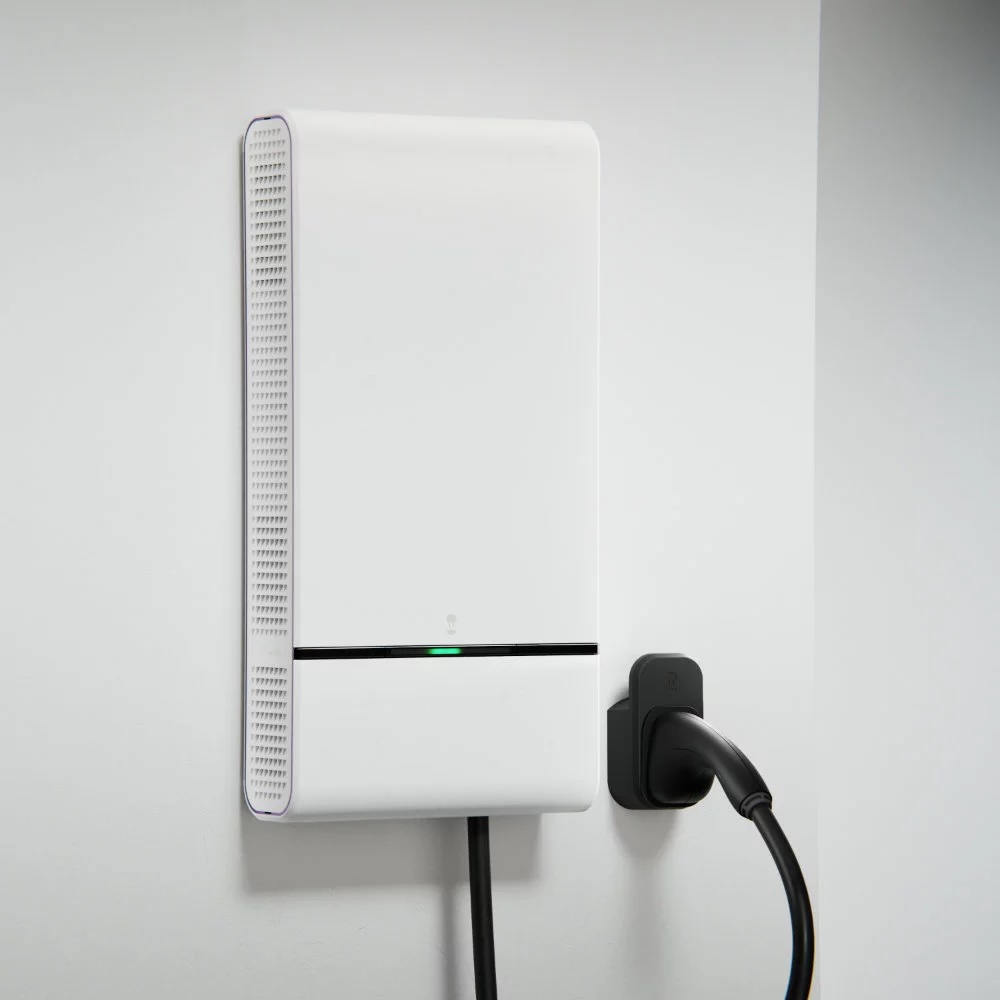
As the electric-vehicle (EV) revolution accelerates, home charging infrastructure is evolving rapidly. One standout in this space is the Quasar 2—by Wallbox—a next-generation bidirectional charger that isn’t just about filling your car’s battery; it’s about turning your EV into a flexible home energy asset. Here’s a deeper dive into what it is, why it matters, how it works, and what you should consider if you’re planning to bring one into your home.
What is the Quasar 2?
In simple terms: the Quasar 2 is a DC bidirectional EV charger. Rather than simply pushing power from the grid into your EV, it enables energy to flow both ways — from the grid to the car and from the car back to your home (Vehicle-to-Home, V2H), or even back to the grid (Vehicle-to-Grid, V2G).
Here are some of its headline features:
- Up to ~11.5 kW (or reported up to ~12.8 kW) charging/discharging power.
- Compatible connector: CCS-type (in many markets) and supports vehicles that comply with modern bidirectional charging standards (such as ISO 15118-20) for full V2X functionality.
- Designed for residential installations: compact design, for indoor/outdoor use (IP55), and includes connectivity (WiFi, Bluetooth, 4G optional).
- Support for energy-management functionality: integrate with solar panels, schedule charging/discharging (off-peak vs peak), monitor via an app.
- Certified for safety standards: the US version has UL certifications (UL 9741, UL 2231-2, UL 1741) for DC bidirectional EV chargers with CCS1 connectors.
In short: you plug it into your EV at home, and the charger not only fills your car but can also let your car’s battery support your home or grid when needed.
Why does it matter?
The Quasar 2 is more than just a “home EV charger” — it represents a shift in how we think about EVs and energy systems. Here are some of the major implications:
1. Turning the EV into a home battery
Traditionally, homeowners who wanted backup power or energy flexibility would install a stationary home battery (for example, a 10–15 kWh unit) or rely on a generator. With the Quasar 2 + a compatible EV, you effectively have a mobile home battery — the car’s high-capacity battery becomes part of your energy system.
That means during outages, or during peak electricity price periods, you can draw from your EV instead of the grid or instead of installing a separate battery system.
2. Cost savings & energy flexibility
One of the key promises is the ability to schedule charging during “cheap” off-peak hours and discharge during peak hours or when the grid is expensive, thereby reducing your electricity bill. The Quasar 2 website claims potential savings up to around €1,000 per year under certain conditions.
Also, if you have solar panels, you can charge the EV with solar, then discharge to home or grid when needed — reducing waste and increasing usage of self-generated clean energy.
3. Supporting grid and resilience
On a larger scale, bidirectional charging opens possibilities for the EV fleet to support the grid (V2G) — for example, providing services such as demand response, peak reduction, or grid stability.
In many places, the grid is under strain, especially during high demand or outages; having many homes with bidirectional capability creates resilience. For homeowners, the ability to power your home from your car during a blackout can be a significant value.
4. Future-proofing
As EVs and standards evolve, being able to adopt bidirectional charging means you are ready for new tariff structures, energy programs, and value streams that may become mainstream in the next few years. The Quasar 2 has been designed with the relevant standards in mind (ISO 15118 etc).
How does it work, in practical terms?
Here’s a rough breakdown of how it works and what you’d need to set it up:
- First, you need a compatible EV: the EV must support bidirectional charging (V2H/V2G) as per the charger’s capabilities. Even though the Quasar 2 can charge many CCS vehicles, the bidirectional features may be limited to those EVs that explicitly support V2X protocols.
- Installation: The Quasar 2 is mounted at home (garage/carport). It must be connected to the home electrical panel and, if needed, to a “Power Recovery Unit” or home-energy management system that enables the discharge back to home loads. In some installations, coordination with the utility might be required (for V2G).
- Charging mode: You plug in your EV, it charges as usual from grid or solar (depending on your setup). The Quasar 2 monitors energy flows and can be programmed (via app) to charge at certain times, use solar surplus, etc.
- Discharging mode / Backup / V2H: When needed (for example, peak tariff time, or a power outage), the Quasar 2 reverses power — the EV battery discharges and supplies your home loads. The app and control logic decide when. In backup power mode, your home can run off the EV until battery levels drop to a set threshold.
- V2G mode (where supported): The system can export energy back to the grid under participating programs or tariffs, providing grid services, earning credits or payments.
- Integration with solar: If you have rooftop PV, the Quasar 2 supports charging from solar surplus, storing excess in the EV, then using or exporting later. This improves the value of your solar system.
What are the standout specs & design details?
Here are some of the more detailed specifications and design notes for the Quasar 2:
- Charging/Discharging power: up to ~12.8 kW.
- Form factor:
- Size approx 747 × 368 × 135 mm.
- Cable & connector: CCS2 (in many markets) with ~5 m cable length.
- Environmental/protection ratings: Suitable for indoor & outdoor installation, IP55/IK10.
- Connectivity: WiFi, Bluetooth, Ethernet, optional 4G. App control for scheduling, monitoring, and energy-management features.
- Certification: UL Mark (US) under UL 9741 (EV power export equipment), UL 2231-2 (protection devices for EV supply circuits), UL 1741 (inverters/converters for distributed energy resources) — making it the first bidirectional charger certified for DC CCS1 in the U.S.
- Compatibility: While it can charge many CCS EVs, bidirectional functionality is only available with EVs that support the required communication/standard (e.g., vehicles with ISO 15118-20).
Advantages & Opportunities
Here are some of the advantages that the Quasar 2 brings, particularly for a homeowner or EV owner in markets transitioning to smarter energy systems:
- Backup power: The ability to power home loads during a blackout using your EV is a big plus, especially in areas with frequent outages. Some claims say “up to three days” of home power under certain conditions.
- Energy cost savings: With time-of-use tariffs, off-peak charging and peak-hour discharging can reduce utility bills. Similarly, integration with solar can maximize self-consumption.
- Reduced grid dependence: Using solar + EV + bidirectional charger gives you more autonomy, less reliance on the grid, and potentially lower carbon footprint.
- Potential income: In some markets, V2G programs may let you earn credits or payments from the utility for supplying grid services.
- Future-proofing your home: As the energy grid evolves, being equipped for V2X (bidirectional) gives you a leg up — you’re ready for systems where cars and homes integrate more tightly.
Challenges & Considerations
No technology is perfect, and while the Quasar 2 is impressive, there are things to weigh carefully before committing.
- Vehicle compatibility: The EV must support bidirectional charging protocols. Many EVs today do not, or support only limited V2L (vehicle to load) rather than full V2H/V2G. As one user put it: “The Quasar 2 system is ‘taking pre-orders’ … when will it actually be available is up in the air.”
So, check that your EV is compatible for bidirectional charging, not just unidirectional. - Cost and installation: Such systems are more expensive than standard AC chargers. Plus, installation of the power recovery unit, panel upgrades, wiring, and possibly utility coordination adds cost. Some users cited ~USD 6,000+ for initiation.
- Home electrical setup: To use backup or full bidirectional capability you may need your home electrical service to meet certain specifications (e.g., 200 A service or specific approvals from the utility).
- Regulatory / utility participation: Participating in V2G or exporting back to the grid may require utility permission, tariffs may not exist yet in your market, and some features may be limited until broader infrastructure is in place.
- Battery degradation and state-of-charge management: Using your EV battery to discharge means you need to manage how much charge you retain for driving needs, and battery ageing may be impacted. Also discharge depth may be limited to preserve battery life. The system and app will generally manage this but it’s something to be aware of.
- Availability and rollout: In some regions, the system is still in pilot phase (though the Quasar 2 is now installed in homes in the U.S., for example via a pilot with the Kia EV9 and University of California, Irvine)
Use-Case Scenario: How It Looks in Reality
Imagine you have a compatible EV in your garage, a rooftop solar system, and you install the Quasar 2 at home. Here’s how a typical day might play out:
- Morning: Your EV is plugged into the Quasar 2 and has charged overnight (or via solar surplus). The home automatically schedules charging at the cheapest grid rate or via solar.
- Daytime: Solar panels generate electricity. Some goes into your home loads, excess goes into charging your EV (via the Quasar 2). The system monitors and optimises flows.
- Evening/Peak Hours: Electricity from the grid is expensive. Instead of pulling from the grid, your home draws from your EV battery (via the Quasar 2 in V2H mode) to power appliances, lights, HVAC. This reduces peak demand and grid cost.
- Night / Off-Peak: The EV may recharge from the grid at low rates (or solar if available) in preparation for the next day.
- Power Outage: Because your EV battery (which might hold 70–100 kWh depending on vehicle) is connected via the Quasar 2 and a power recovery unit, your home can switch to “island mode” and draw from your EV for critical loads while the grid is down.
- Grid Services (optional): If your utility supports it, when your EV is idle you may send energy back to the grid and get credits — effectively your EV and home become a distributed energy resource.
In this way, your EV becomes more than transport; it becomes an integral part of your home’s energy management system.
Is this relevant in India / for Indian markets?
Given that you’re based in Indore, Madhya Pradesh (India), you might wonder how relevant this kind of system is locally. A few thoughts:
- Bidirectional charging is still new globally, and the infrastructure, regulations, utilities, tariffs and vehicle support vary widely from country to country.
- In India, many EVs currently are single-direction chargers, and domestic homes may need upgrades to their electrical systems. But as policy moves towards smarter grid, renewable integration and time-of-use tariffs, a bidirectional charger like Quasar 2 could become highly relevant.
- The cost-benefit equation depends heavily on electricity tariffs, solar availability, reliability of grid (how frequent are outages), and utility rules around exporting power or using vehicles as backups.
- If you have solar panels and want home backup power and flexible energy usage, then a system like this could make sense — but you’d need to check local utility regulations, cost of equipment & install, vehicle compatibility in India (i.e., EV must support bidirectional charging).
- For now, you may consider this as forward-looking: installing a charger now that supports bidirectional may give you the option to unlock more value in the future as EVs and grid infrastructure evolve in India.
Final Thoughts
The Quasar 2 is a very exciting development: it shifts the paradigm of charging EVs from being a one-way transaction (grid → car) to being part of a two-way energy ecosystem (grid, solar, car, home all interacting). For forward-thinking EV owners, homeowners with solar, or folks in areas with grid instability, the benefits – backup power, cost savings, resilience – are substantial.
However, the realisation of that value depends heavily on the ecosystem: vehicle compatibility, home electrical setup, utility tariffs & rules, installation costs, and how often you’ll derive the value (how much solar you have, how frequent your grid is unstable, how high your electricity peak prices are). It’s not a plug-and-play benefit in every scenario yet.
If you are considering the Quasar 2 in India (or planning ahead), here are some actionable steps:
- Check whether your EV supports bidirectional charging (V2H/V2G) and is compatible with ISO 15118-20 or other relevant protocols.
- Evaluate your home’s electrical infrastructure: service rating, panel capacity, wiring, whether you’ll need a power recovery unit, installer expertise.
- Explore solar + EV scenario: If you have or plan solar panels, the synergy is stronger.
- Investigate tariffs and utility rules: Are there time-of-use tariffs? Can you export to grid? Are there incentives for backup power installations?
- Consider cost vs benefit carefully: Up-front cost (charger + install + any panel/upgrade), vs ongoing savings, backup value, peace of mind.
- Stay updated: As more EVs, utilities and regions embrace bidirectional charging, the ecosystem will mature, standards will stabilise, costs may come down.
In short: if you believe in an energy-future where your EV isn’t just for driving but for power-management, resilience and savings, the Quasar 2 is one of the most capable options available today. It may well be a smart investment in the years ahead — especially in a context like India where solar and smart grid opportunities are growing.
If you like, I can pull up India-specific pricing, compatibility of Indian EVs with bidirectional charging, and local installation considerations for the Quasar 2 (or similar products) so you can assess it locally. Would you like me to do that?

WeeklyMinds.com is proud to feature an author who brings a wealth of knowledge and experience to our blog. Weekly Minds is an accomplished freelancer writer with 12 years of experience in the field.
WeeklyMinds.com has a passion for sharing insights and perspectives on political, news, technology, home improvement, interiors and many more. Their unique perspective on current affairs has been featured in numerous publications and they have been a guest speaker at college fests.
WeeklyMinds.com is also an avid interest in writing and reading and enjoys singing, music, shopping, travelling and some more. In their free time, they can often be found of reading the novels and various current topics.
We are thrilled to have Elia Scala as a contributor to WeeklyMinds and look forward to their continued insights and contributions to our blog.