

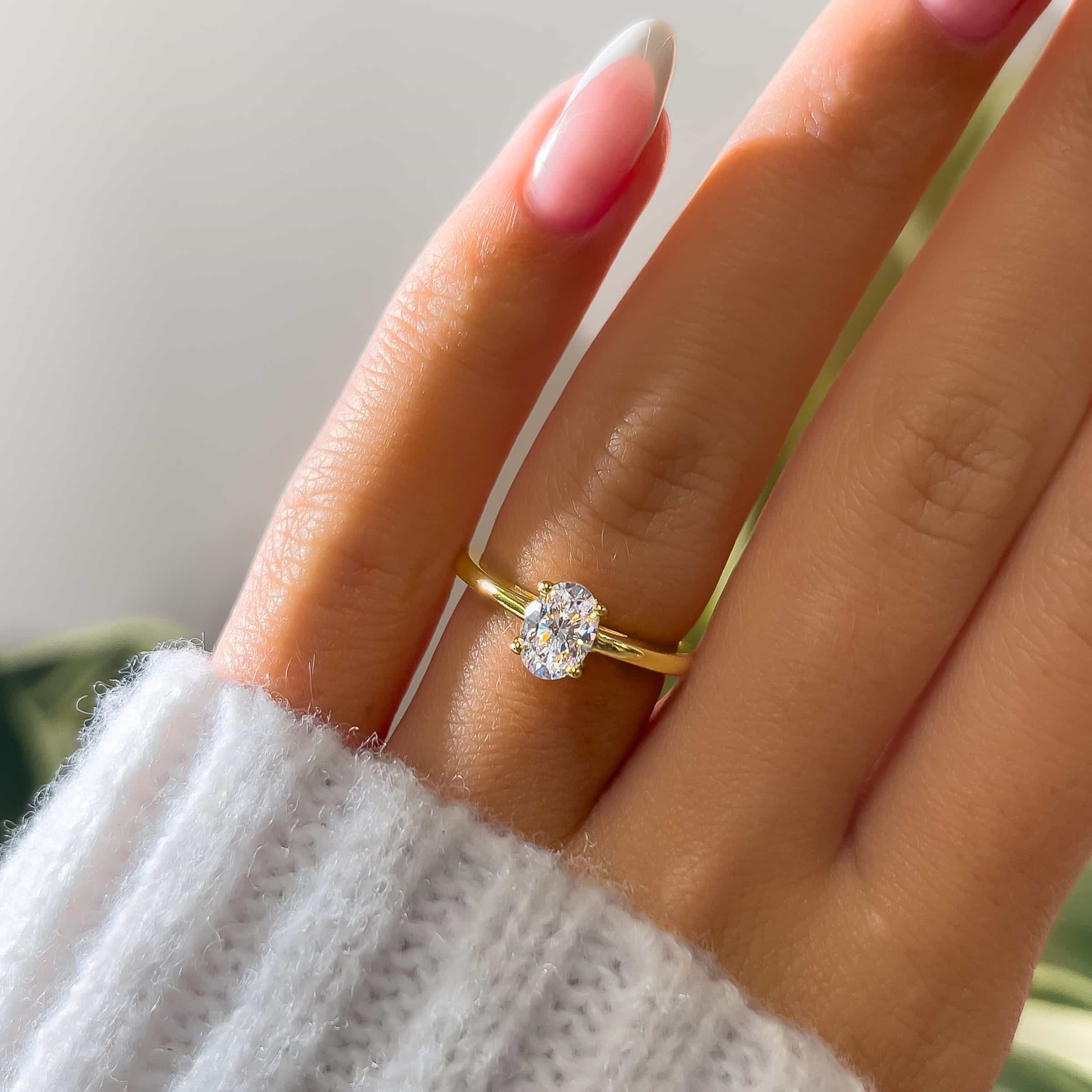
Whether you’re planning to propose, celebrate an anniversary, or mark a special milestone, buying a diamond ring is one of the most important and exciting things you’ll ever do. There are so many choices on the market today that it can be hard for first-time buyers to know what to do. You can make an informed choice and find the perfect ring that tells your love story while staying within your budget if you know what makes a diamond beautiful, valuable, and high quality.
The “4 Cs”—Cut, Color, Clarity, and Carat weight—are the most important things to know before you start shopping for diamonds. These standards, which are known all over the world, set the price and quality of every diamond. Cut is probably the most important thing because it has a direct effect on how brightly your diamond shines. A well-cut diamond reflects light in a way that makes it look beautiful and creates the fire and scintillation that make diamonds so beautiful. If a diamond is poorly cut, it will look dull even if it has the best color and clarity. So, to get the most sparkle for your money, you should look for diamonds with excellent or very good cut grades.
Diamonds that are colorless (D) or light yellow or brown (Z) are the most expensive. But for most buyers, the best range is G through J, which is called “near colorless.” These diamonds are a great deal because the small color differences are almost impossible to see with the naked eye once the diamond is set in jewelry. This lets you spend more of your money on the size and quality of the cut while still getting a beautiful look.
Clarity looks at the inside flaws, or inclusions, and the surface flaws. Diamonds that are perfect do exist, but they are very rare and cost a lot. Most inclusions in diamonds with clarity levels of VS1 to SI1 are too small to see with the naked eye. These are great clarity levels that balance beauty and value. Finding a “eye-clean” diamond is the most important thing. This means that the inclusions don’t change how the stone looks when you look at it normally.
The size of a diamond is based on its carat weight, but bigger isn’t always better. A smaller diamond that has been cut well often looks better and more brilliant than a larger stone that has been cut poorly. Think about how much money you can save by buying diamonds that are just under popular carat weights, like 0.9 carats instead of 1.0 carats. They will look almost the same size. Prices don’t go up in a straight line as the carat weight goes up. Instead, they go up a lot faster at certain popular milestone weights.
The setting you choose has a big effect on how your ring looks overall and how big and bright your diamond looks. Classic solitaire settings make the diamond the star by letting in as much light as possible, which makes it shine. Halo settings have smaller stones around the center diamond that make it look bigger and add extra sparkle. Three-stone settings are a symbol of your past, present, and future all at once. Vintage-inspired settings have intricate details and a classic look that never goes out of style.
The metal you choose will change how the ring looks and how long it lasts. Platinum is the most durable and hypoallergenic choice. It is naturally white and doesn’t tarnish, but it costs a lot. White gold looks similar but costs less. However, it needs to be cleaned every so often to keep its white color. Yellow gold is a classic color that looks great on many skin tones. Rose gold, on the other hand, is a more modern and romantic option that has become more popular in recent years.
Before you start shopping, it’s important to set a budget that makes sense. Even though traditional advice says to spend two months’ salary, your budget should be based on your own financial situation and what is most important to you. When making a smart budget, you should choose near-colorless grades over colorless ones, prioritize cut quality over size, and choose clarity grades that are eye-clean but not perfect. When you plan your total investment, don’t forget to include the cost of the setting, insurance, and any changes you want to make.
The shape of a diamond has a big effect on both its look and its price. Round brilliant diamonds are the most popular choice because they sparkle the most, but they usually cost more because they are in high demand and cutting waste. Princess cut diamonds are a great choice if you want a square diamond that shines brightly and is less expensive. Emerald and Asscher cuts have step-cut faceting that makes them look clear and elegant. Oval, marquise, and pear shapes are other options that can make fingers look longer and slimmer.
Getting your diamond certified by a reputable gemological lab is the best way to make sure that the information you have about it is correct. The Gemological Institute of America (GIA) is the most respected certifying body because it has strict and consistent grading standards. The American Gem Society (AGS) is also well-known, especially for grading cuts. Always ask to see the certificate and check its validity on the website of the lab. Don’t buy diamonds that have been graded by labs that aren’t well-known or that you don’t trust, because their grading standards may be too high or not consistent.
Before you buy a diamond ring, do a lot of research. Find out what things are selling for right now, set a budget that makes sense, and think about your partner’s style and way of life. Whether you shop at a traditional jeweler that offers personalized service or an online store with low prices and a wide range of options, make sure they give you all the information you need about each diamond, including high-quality photos, videos, and certificates.
Be on the lookout for signs that something isn’t right. Dealers you can trust will always show you certificates, have clear return policies, and give you honest information about their diamonds. Stay away from dealers who use high-pressure sales techniques, make prices that seem too good to be true, or use words that are not clear. It should be clear if diamonds have been treated or enhanced. Be careful with terms like “investment grade” because diamonds are not investments.
Taking care of your diamond ring will keep it beautiful for years to come. Take off your ring when you do a lot of manual work, play sports, or clean with strong chemicals. Use mild soap and warm water to clean it often, and have a professional clean and check it once a year. Get an insurance appraisal within 30 days of buying the ring. You might want to add it to your homeowner’s insurance or buy separate jewelry insurance.
The best diamond ring is one that strikes the right balance between technical quality, personal meaning, and your budget. Use both your gut and your technical knowledge to help you choose the right ring. You should feel excited and sure about your choice. When making this important choice, take your time, ask questions, and work with trustworthy professionals who put education ahead of making sales. If you take your time and make sure you know what you’re doing, you’ll find a beautiful diamond ring that will last a lifetime and show how much you love each other.

WeeklyMinds.com is proud to feature an author who brings a wealth of knowledge and experience to our blog. Weekly Minds is an accomplished freelancer writer with 12 years of experience in the field.
WeeklyMinds.com has a passion for sharing insights and perspectives on political, news, technology, home improvement, interiors and many more. Their unique perspective on current affairs has been featured in numerous publications and they have been a guest speaker at college fests.
WeeklyMinds.com is also an avid interest in writing and reading and enjoys singing, music, shopping, travelling and some more. In their free time, they can often be found of reading the novels and various current topics.
We are thrilled to have Elia Scala as a contributor to WeeklyMinds and look forward to their continued insights and contributions to our blog.