


The modern conversation around health has entered a new era. With access to more information, technology, testing, and personalized tools than ever before, many people are searching for ways to extend their lives and improve their wellbeing. But alongside these advancements, a new challenge has emerged: the pressure to constantly measure, adjust, and improve every aspect of ourselves.
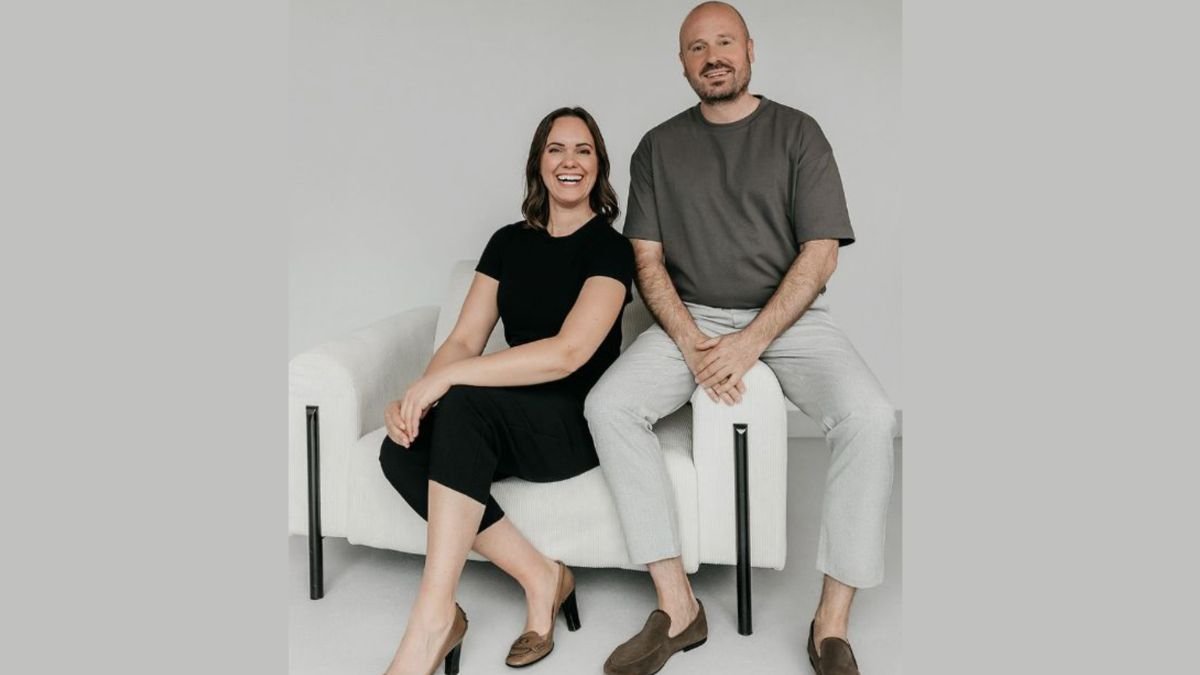
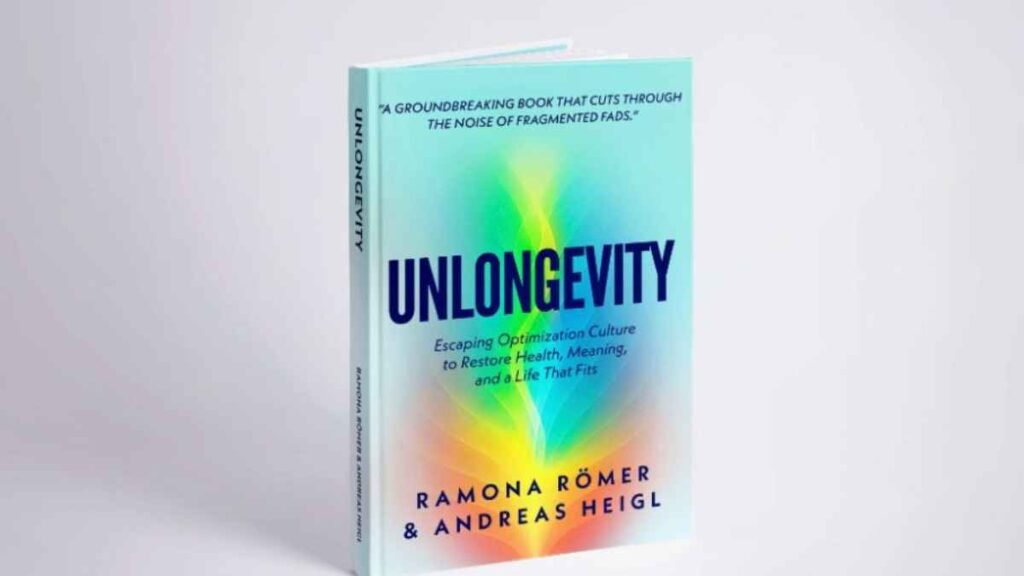
In UNLONGEVITY: Escaping Optimization Culture to Restore Health, Meaning, and a Life That Fits (Morgan James, August 11, 2026), VIMED CELL founders Ramona Römer and Andreas Heigl examine the hidden tension behind today’s pursuit of peak health. Rather than questioning the value of science, innovation, or longevity research, they explore what happens when improvement becomes an endless pursuit and when the tools designed to support wellbeing begin to create new forms of pressure.
Drawing from years of work with individuals seeking better health outcomes, Römer and Heigl developed a perspective centered on seeing the person as a complete system rather than a collection of isolated measurements. Their approach considers the connection between biology, cognition, emotion, energy, and purpose, emphasizing that lasting health requires more than simply adding new practices or following the latest trends.
In this conversation, Römer and Heigl discuss why modern wellness can feel overwhelming, how people can reconnect with their own needs, why health should serve the life someone wants to live, and what it means to pursue longevity with greater clarity and intention.
The idea of “optimization culture” feels more relevant than ever. What made you realize that the pursuit of health and longevity had become exhausting rather than empowering?
It was never the pursuit of health that concerned us. It was the relationship people gradually developed with themselves along the way.
Caring for ourselves comes from a very different place than constantly trying to improve ourselves.
One is rooted in respect.
The other can quietly become rooted in the feeling that who we are today is somehow still not enough.
Over the years, we increasingly met people who were doing almost everything possible for their health. Yet many carried a constant sense that there was always one more thing to do, one more habit to change, one more intervention to explore.
That can become exhausting because there is never a moment of arrival.
Perhaps the future of longevity begins with a different question.
Instead of asking, “How can I become a better version of myself?”
Perhaps we begin asking, “How can I care more deeply for the person I already am?”
From that place, many health decisions become surprisingly clear.
You describe Unlongevity as a movement rather than simply a wellness method. What conversations or experiences convinced you that people were looking for a different way forward?
We never set out to create a movement or another approach to health.
Unlongevity emerged because, over many years of working with people, we kept observing the same pattern. Individuals were investing extraordinary amounts of time, effort, and resources into their health, yet many still felt that something essential remained unresolved.
They often couldn’t quite explain it. Over time, those observations became clearer.
Over time, however, those observations became clearer. We realized that what was missing wasn’t necessarily another intervention or another piece of information. Often, it was a way of seeing the whole picture.
The book is our attempt to give language to what we had already been observing and applying in practice for many years.
If it contributes anything, we hope it simply encourages people to pause, step back, and see themselves a little more clearly.
Your framework expands well-being beyond physical health into biology, cognition, emotion, energy, and purpose. Was there one of these five axes that surprised you most in its impact?
Interestingly, it was never one area that surprised us most. It was the relationship between them.
Over the years, we repeatedly found ourselves asking where a person’s challenges actually began. Sometimes they appeared biological. Sometimes they seemed connected to chronic stress, relationships, life circumstances, or a loss of direction. Yet the more closely we looked, the more difficult it became to separate these influences from one another.
The human system rarely works in isolated compartments. What happens in one area often shapes many others, sometimes quietly and over long periods of time.
That realization gradually changed the way we approached health. Instead of asking which single factor mattered most, we began asking how the different parts of a person’s life were interacting and whether they were supporting one another or quietly working against each other.
In many ways, that became one of the central ideas behind Unlongevity. The greatest insight was never one individual dimension. It was discovering that health begins to look very different when the whole person comes into view.
Many people feel pressure to track every metric, habit, and routine. How can someone tell the difference between healthy self-awareness and falling into optimization fatigue?
Perhaps the first step is letting go of the idea that there is a right answer.
Many people approach health as though they are trying to pass an exam. They wonder whether they are doing enough, choosing the right protocol, following the right routine, or making the right decision.
We see it a little differently.
Rather than judging ourselves, we encourage people to become curious.
To pause.
To step back and look at the bigger picture.
What genuinely feels supportive today?
What has become habit rather than necessity?
What still belongs?
What no longer serves?
What may simply belong to a different season of life?
Those questions are very different from asking whether we are succeeding or failing.
Health is not a performance. It is an ongoing relationship with ourselves, and like every relationship, it evolves over time.
Sometimes clarity arrives when we stop trying so hard to find it.
The book talks about restoring natural rhythm rather than chasing endless improvement. What does living in rhythm actually look like in everyday life?
For us, rhythm is not about slowing down. It is about responding appropriately.
Every living system is remarkably adaptive. The heart, the immune system, the nervous system, and every cell in our body continuously adjust to changing conditions. Human life follows the same principle. Different phases of life call for different priorities, different levels of effort, different forms of recovery, and sometimes completely different ways of thinking.
The challenge begins when we try to approach every stage of life with the same routines, the same expectations, and the same intensity. Even habits that once served us well can eventually become another source of pressure if they are no longer aligned with who we are or what life is asking of us.
For us, living in rhythm means allowing our health decisions to evolve together with the individual. It means recognizing that what creates resilience today may be different from what created resilience five years ago.
Perhaps rhythm is simply another word for coherence. It is the feeling that the different parts of our lives are working together rather than competing for our attention.
When that happens, health gradually becomes less about managing ourselves and more about supporting the life we genuinely want to live.
Unlongevity pushes back against the idea that longer life automatically equals better life. How do you define a meaningful life in this context?
We don’t believe there is a universal definition of a meaningful life.
For one person, it may be raising a family. For another, building a company, creating something of lasting value, supporting future generations, contributing to society, exploring the world, or simply being fully present with the people they love.
That is why we believe longevity is a means rather than an end.
The real question is not simply how many years we live, but what those years allow us to experience. Health creates possibilities. It allows us to continue contributing, connecting, discovering, resting, laughing, loving, and living in ways that feel authentic to us.
When longevity becomes the destination, life can gradually become organized around preserving health. When health becomes the foundation, it creates the freedom to live in a way that feels true to who we are.
Perhaps a meaningful life is not something we achieve. Perhaps it is something we recognize when the different parts of our lives begin to feel coherent again.
Were there moments while developing this philosophy where either of you had to confront your own assumptions about productivity, success, or wellness?
Absolutely.
Neither of us would claim that these insights came from writing a book. They emerged gradually through years of working with people, observing our own lives, and questioning many of the assumptions we had once taken for granted.
Like many people, we also grew up with ideas about productivity, achievement, and success. Over time, both our professional work and our personal experiences kept challenging those ideas.
One of the biggest realizations was that life does not become richer simply by doing more. We repeatedly saw that health, fulfillment, and even performance often improved when people became clearer about what truly mattered and had the courage to let go of what no longer belonged.
That lesson has shaped the way we live as much as the way we work. In many ways, Unlongevity is simply an articulation of that journey.
If readers take away just one thing from Unlongevity, what do you hope changes in the way they approach health, aging, and fulfillment?
I hope people close the book feeling a little lighter than when they opened it.
Today, many people carry the quiet pressure of believing they should always be doing more. More for their health. More for their future. More to become a better version of themselves.
If Unlongevity helps ease some of that pressure, then I think it has achieved something meaningful.
I hope readers leave with greater trust in themselves, greater confidence to follow their own path, and the reassurance that health does not have to become another full-time job.
Health should support life.
It should give us the freedom to spend our time with the people we love, to create, to contribute, to rest, to laugh, and to live in a way that feels true to who we are.
If readers close the book feeling a little lighter than when they opened it, we will be deeply grateful.
Links to more:

WeeklyMinds.com is proud to feature an author who brings a wealth of knowledge and experience to our blog. Weekly Minds is an accomplished freelancer writer with 12 years of experience in the field.
WeeklyMinds.com has a passion for sharing insights and perspectives on political, news, technology, home improvement, interiors and many more. Their unique perspective on current affairs has been featured in numerous publications and they have been a guest speaker at college fests.
WeeklyMinds.com is also an avid interest in writing and reading and enjoys singing, music, shopping, travelling and some more. In their free time, they can often be found of reading the novels and various current topics.
We are thrilled to have Elia Scala as a contributor to WeeklyMinds and look forward to their continued insights and contributions to our blog.